Home / Work / Answers from your own documents, and a smarter customer portal
Answers from your own documents, and a smarter customer portal
Staff ask questions in plain words and get answers that cite your procedures. Customers fill in warranty claims by uploading a nameplate photo.
- Use cases
- Answers for your staff · AI features in your product
- Connects to
- Shared drives, Single sign-on, Customer portal, Serial records
- Starts with
- Free assessment, then a 2-week prototype
Example projects show how we would approach common requests. The companies, screens and data are samples designed by our team, not client work. For delivered work, see our case study.
An answer with its sources
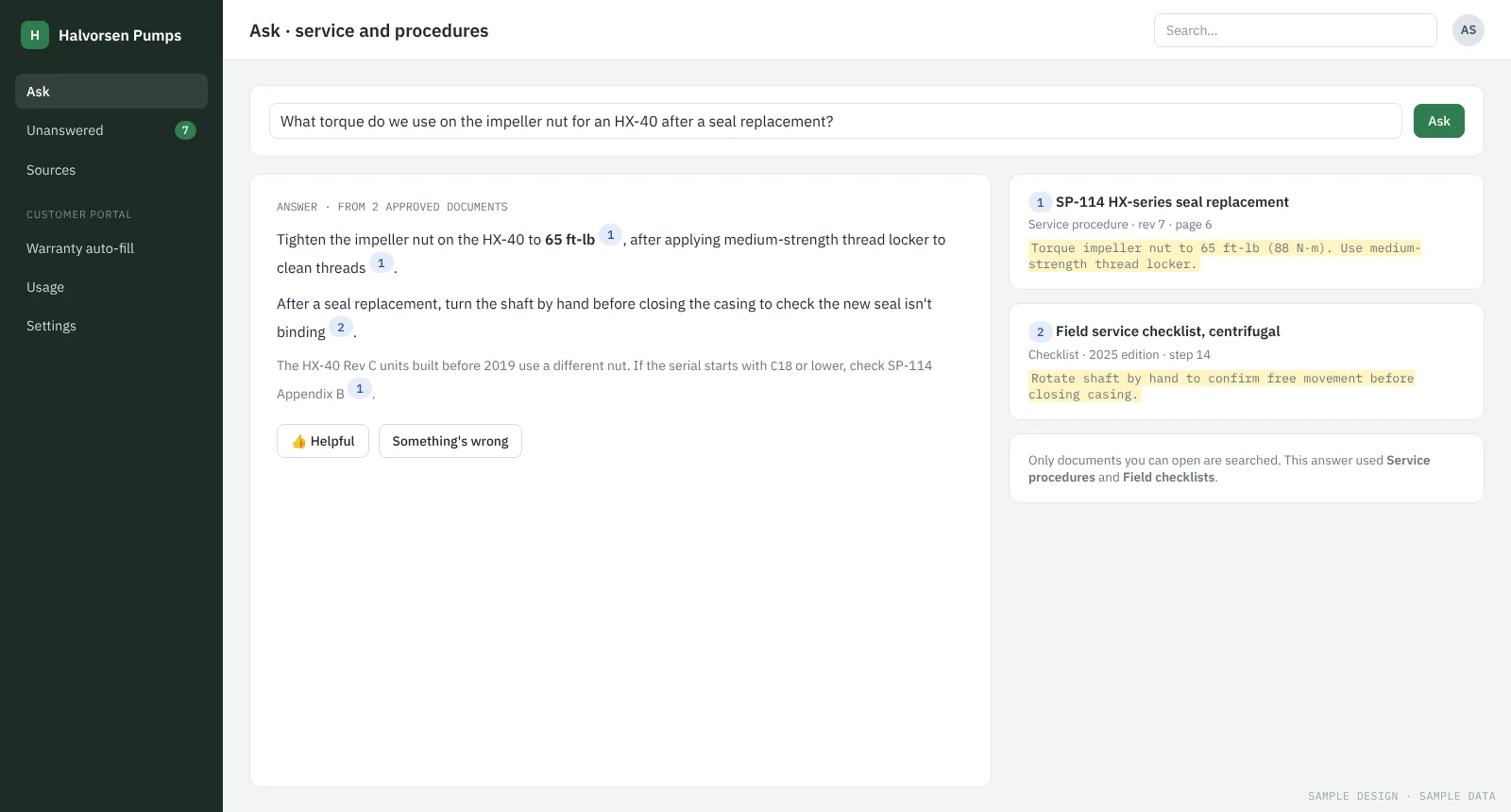
Every statement is numbered and linked to the procedure and page it came from, so staff can check before acting.
Sample design · sample data
Where the hours go today
A pump manufacturer keeps service procedures, datasheets, checklists and past quotes on shared drives. Experienced staff answer the same questions for newer colleagues every day. On the customer portal, warranty claims arrive with wrong model and serial numbers, and each one needs a phone call to fix.
The goal: Let staff find the right answer on their own, with the source in front of them, and have customers send complete, correct warranty claims the first time.
How the automation works
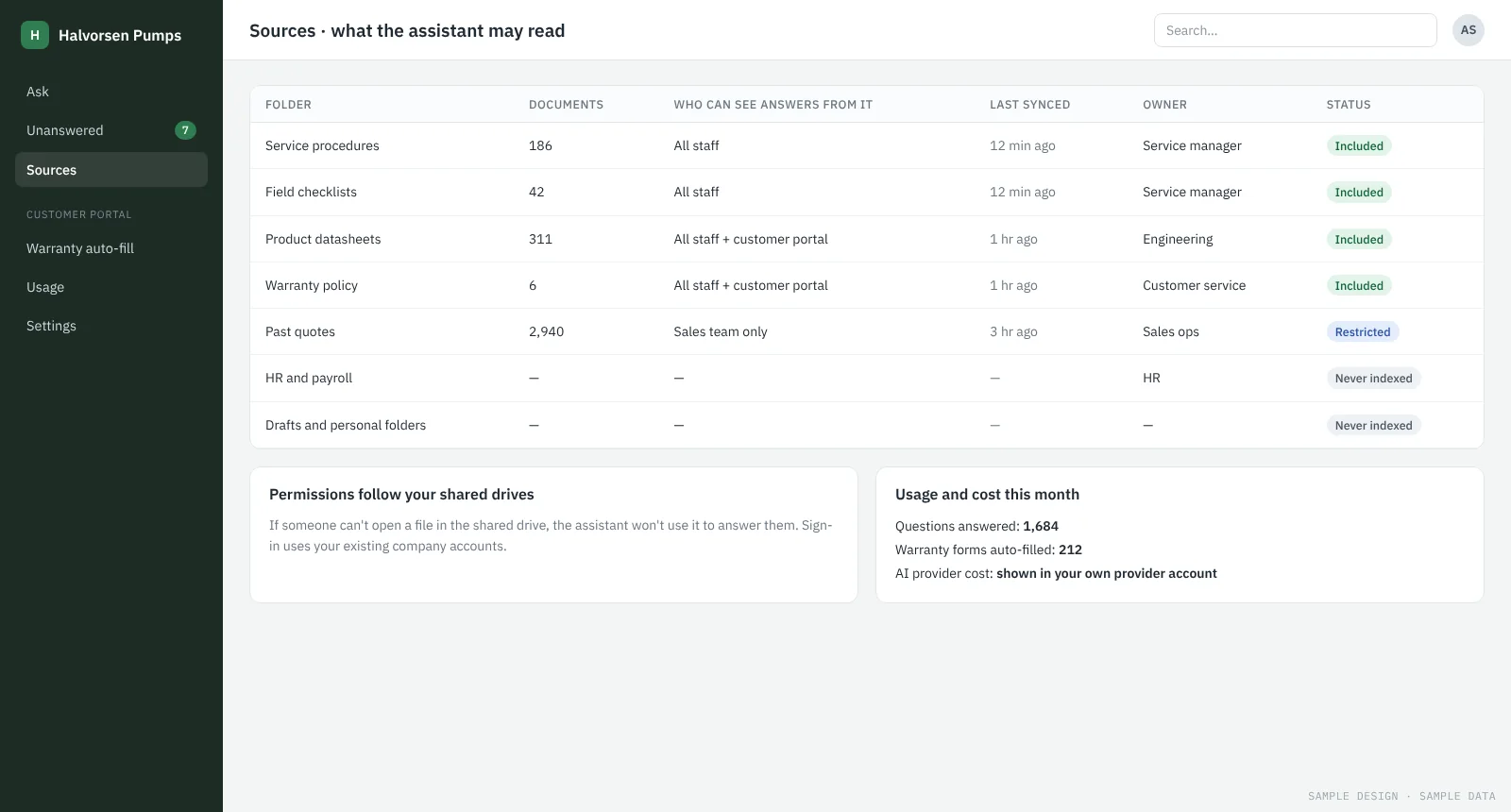
- Index only the folders the document owners approve, and keep the drive permissions: nobody gets answers from files they can’t open
- Answer questions in plain language and quote the document and page each statement came from
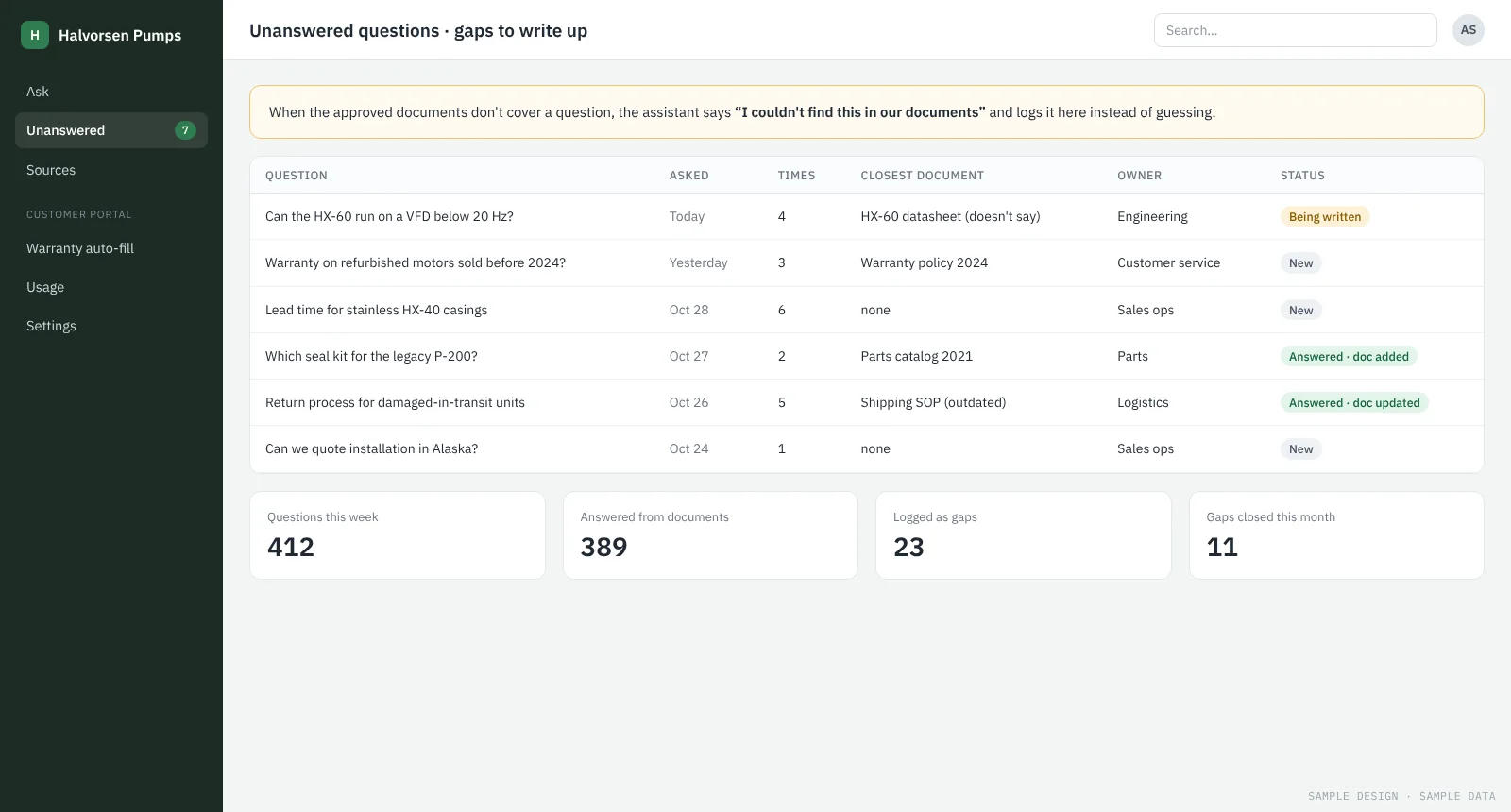
- Say “I couldn’t find this in our documents” when they don’t cover the question, and log it as a gap
- Give document owners a list of unanswered questions so the missing pages get written
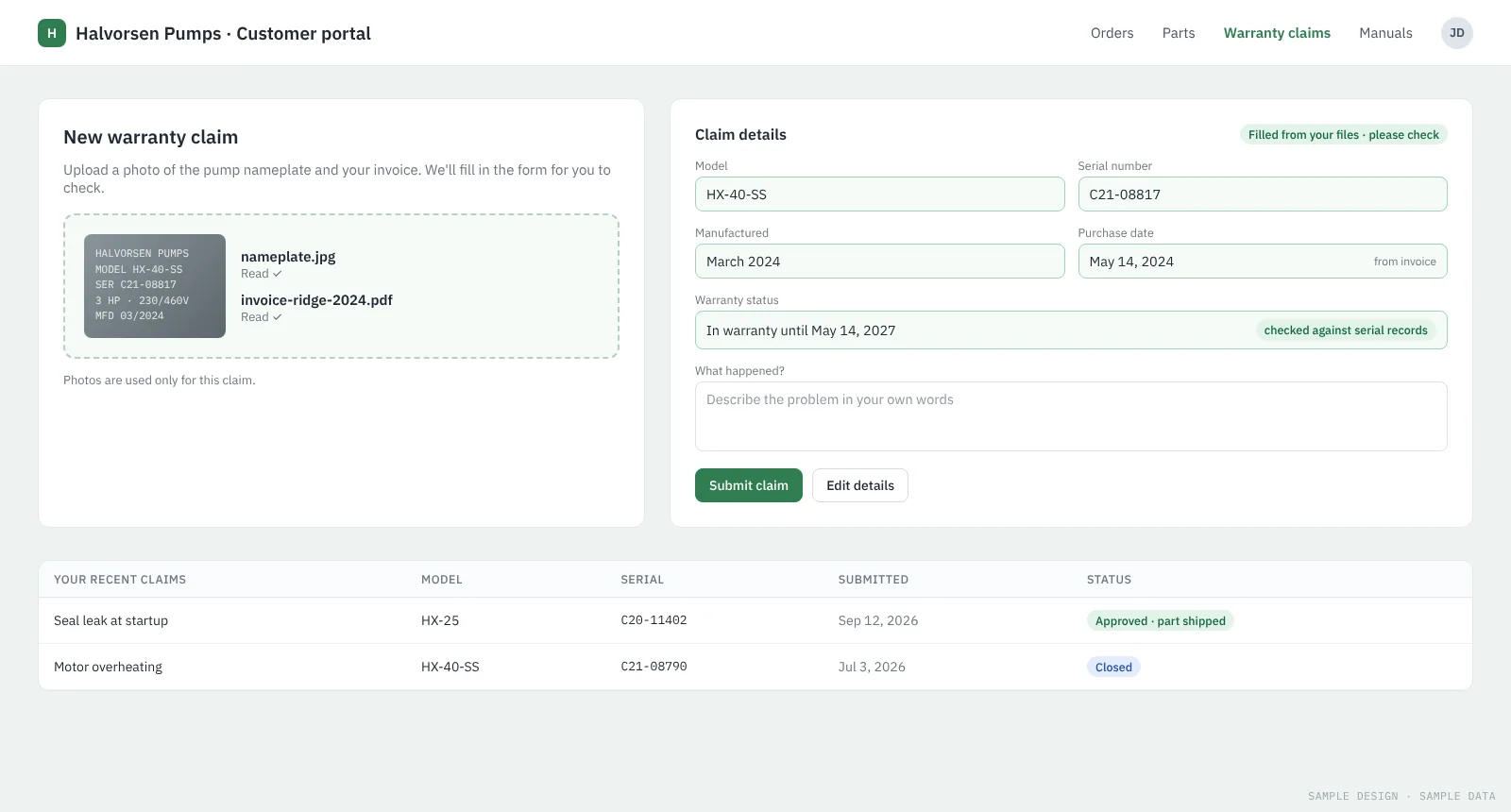
- In the customer portal, read the nameplate photo and the invoice, then pre-fill model, serial, dates and warranty status for the customer to check
- Check warranty status against the serial records in code, never by the AI
What your team still decides
Document owners decide what is included. Staff open the source before acting on an answer. Customers review every pre-filled field, and the service team still approves each claim.
How we’d know it’s working
- Answer quality on a test set of real questions written by your team
- How often sources are cited correctly
- Share of questions answered from documents vs logged as gaps
- Warranty claims needing a follow-up call
We agree the bar with you before the prototype starts. If it isn’t met, you stop there.
Other projects
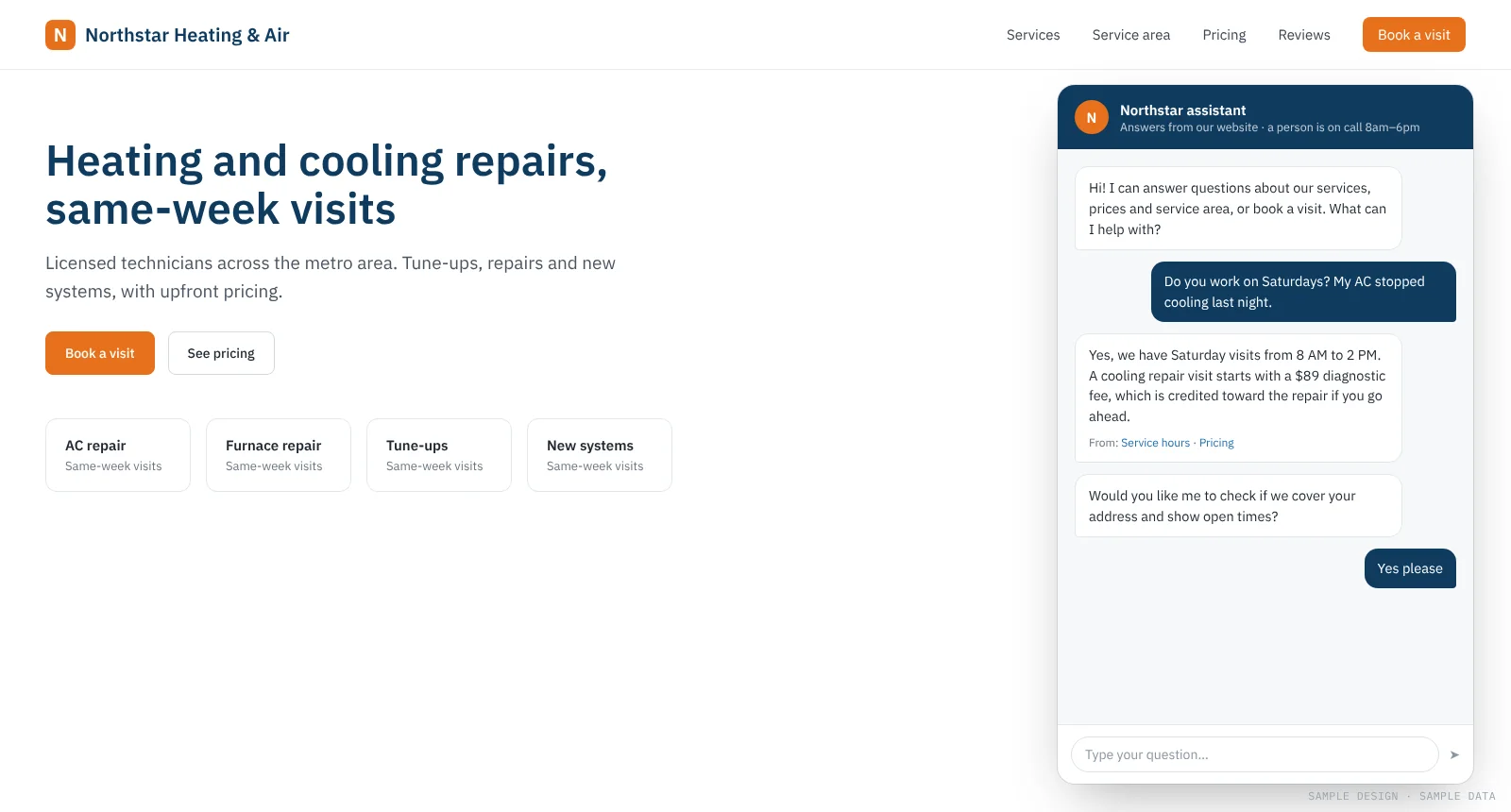
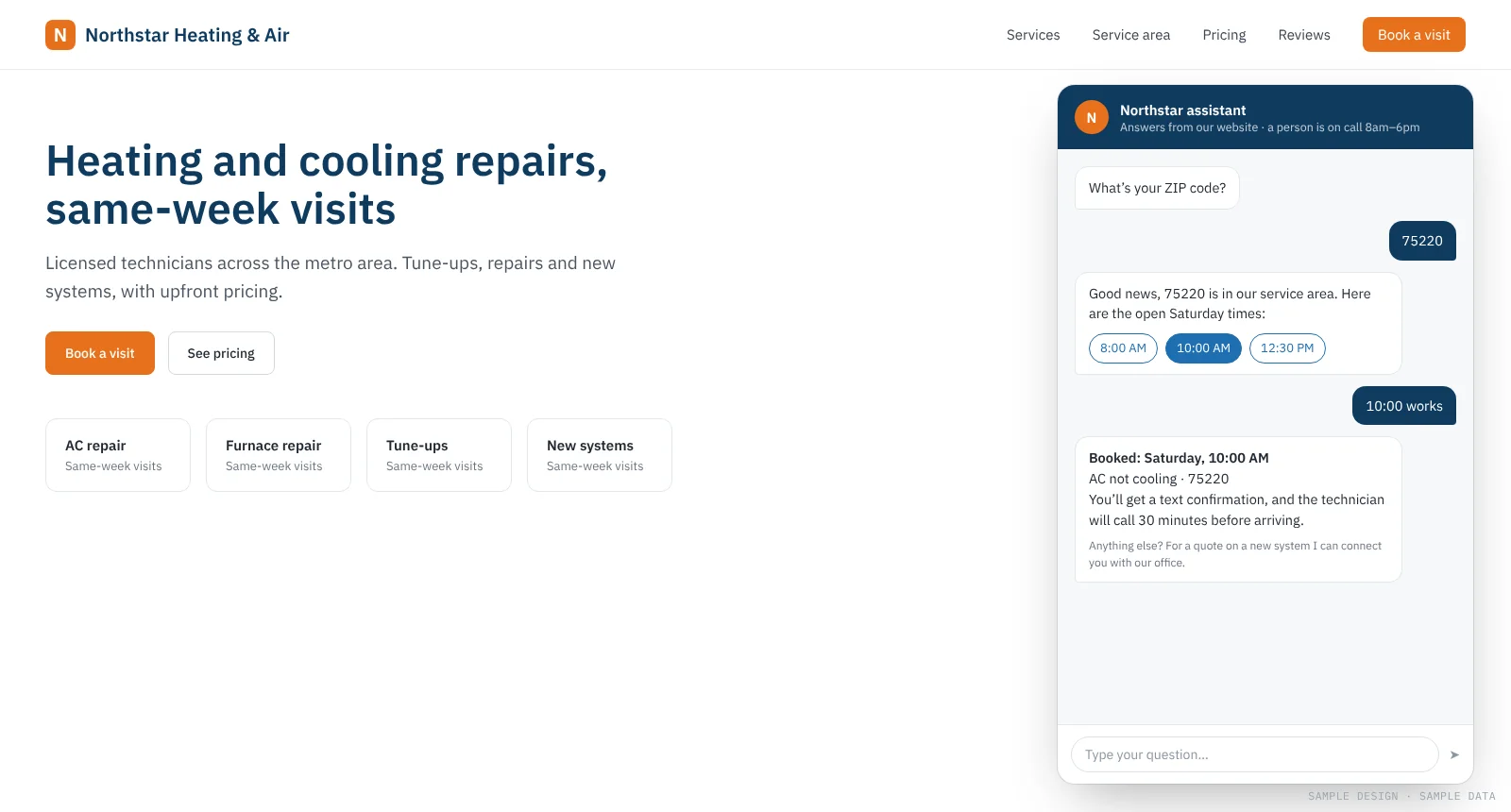
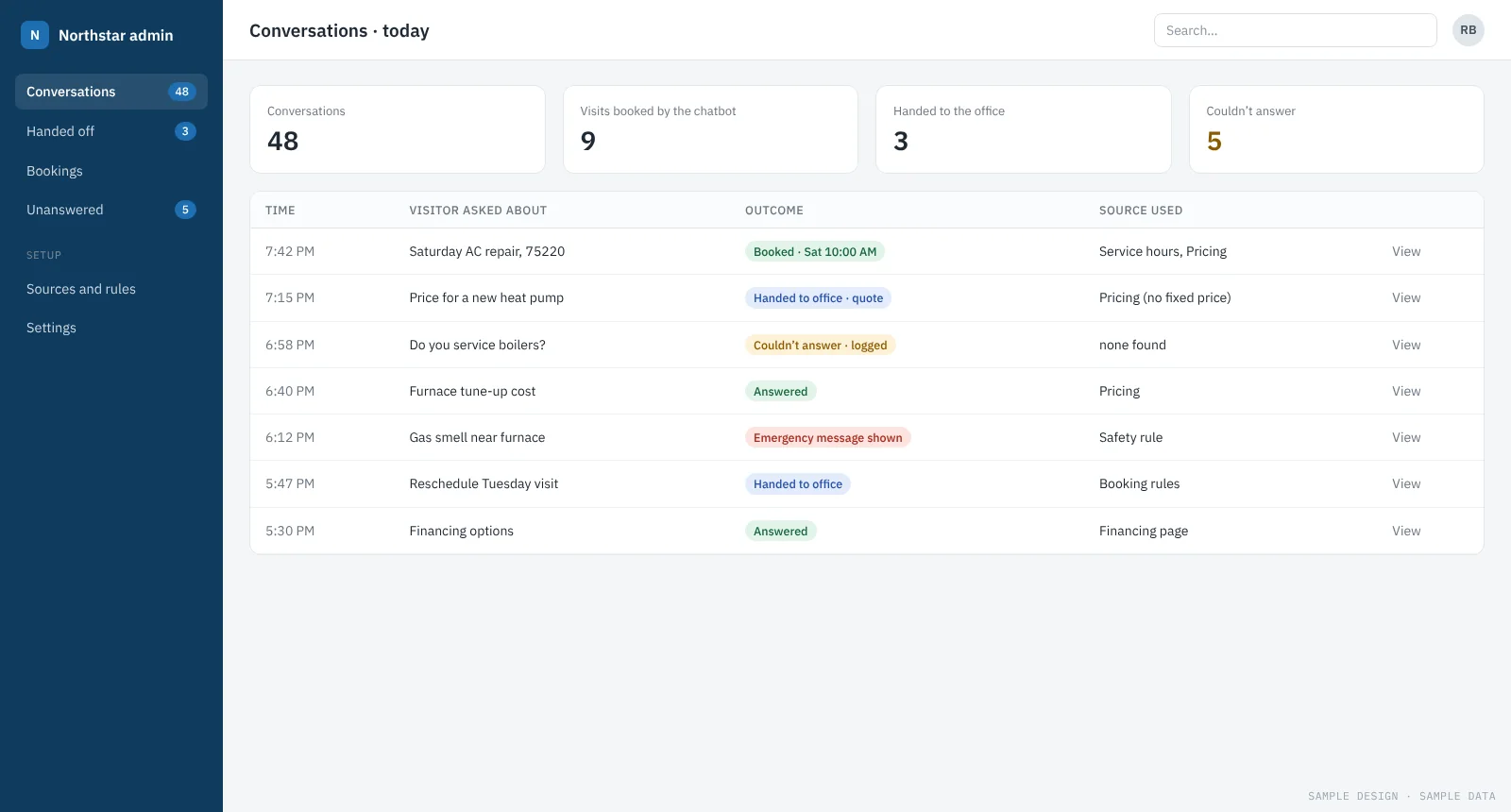
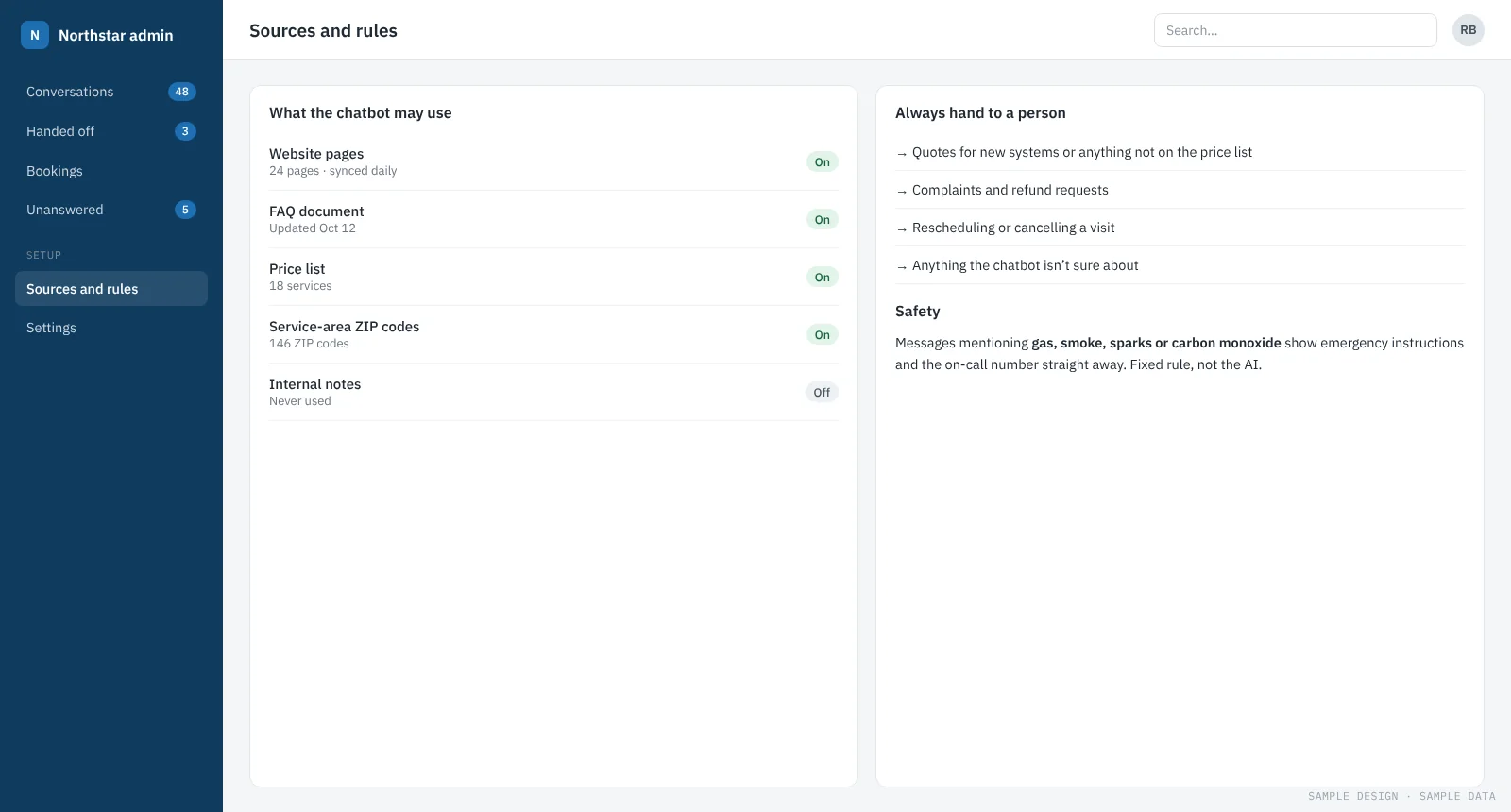
A website chatbot that answers questions and books visits
A chatbot on the company website answers questions from the company’s own pages, checks the service area and books appointments, with a person on call for anything else.
See how it works →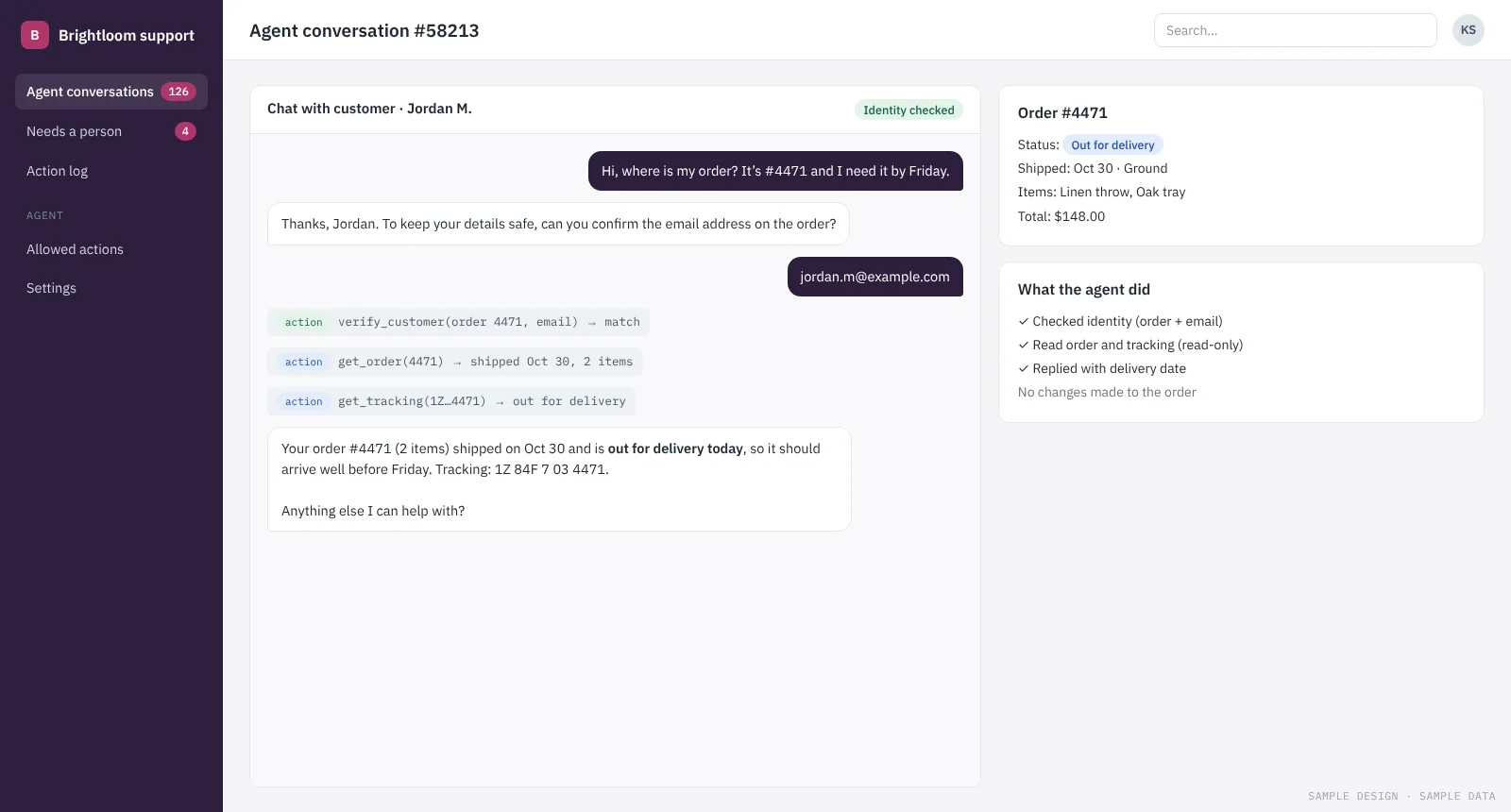
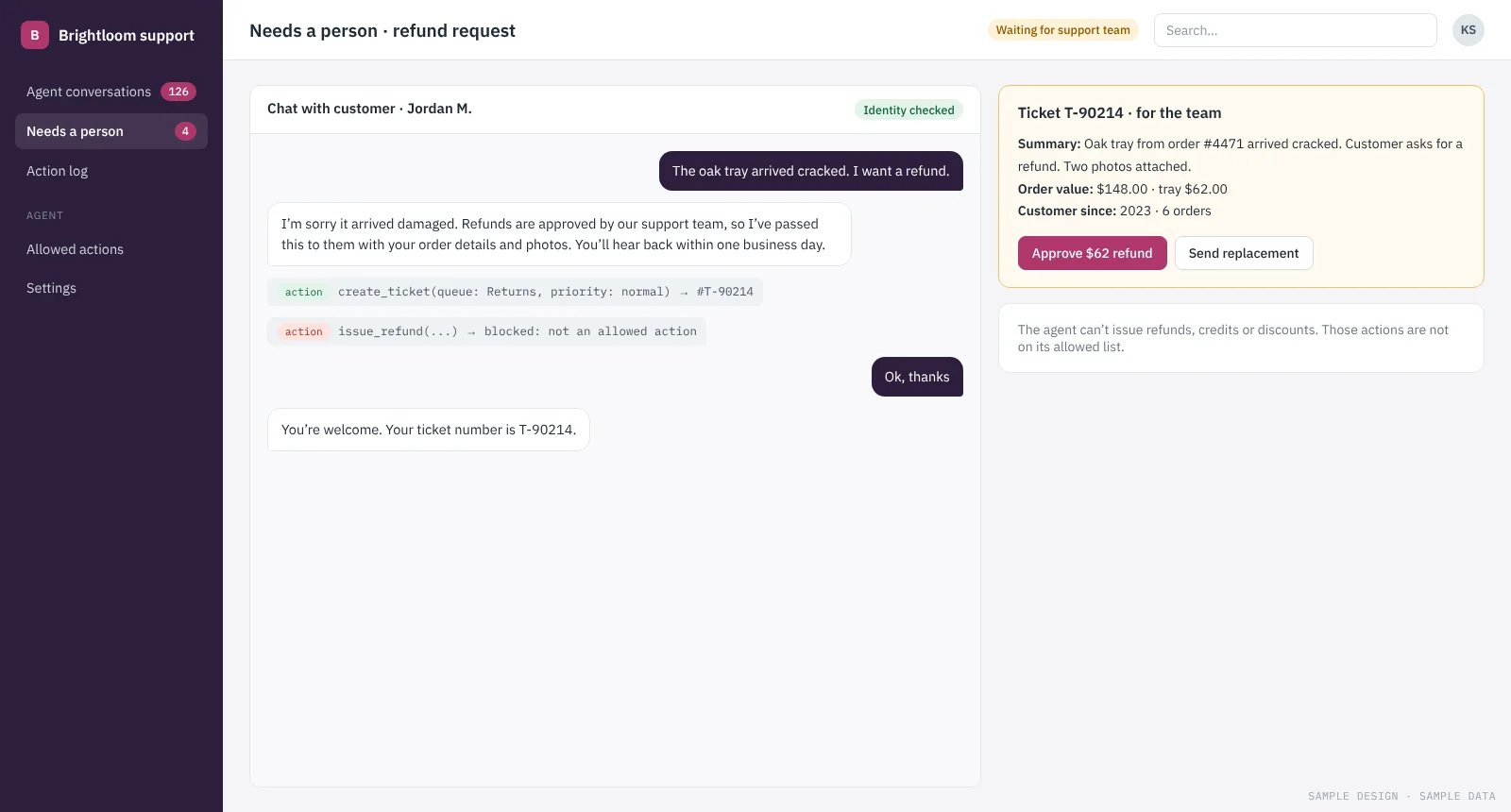
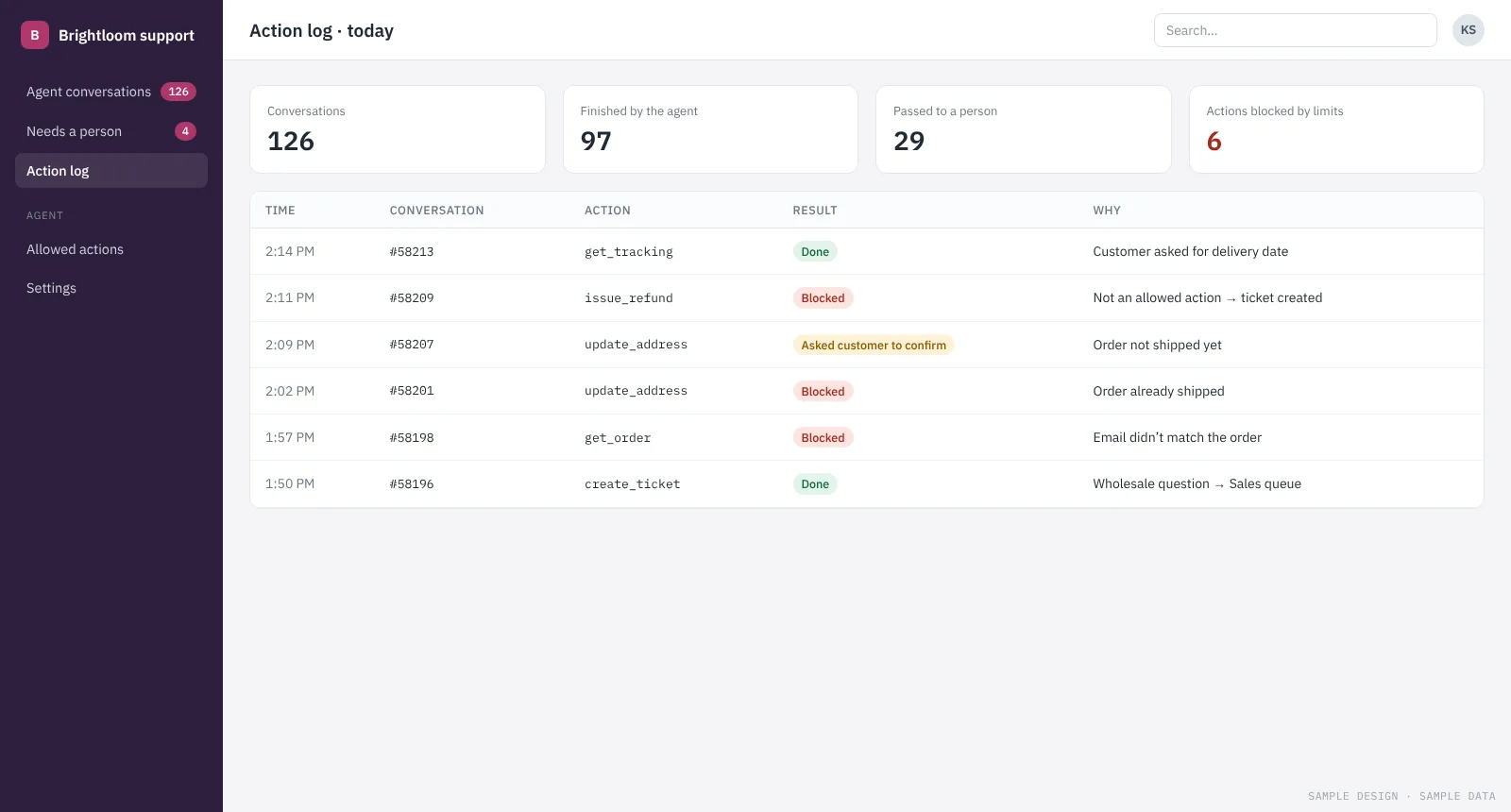
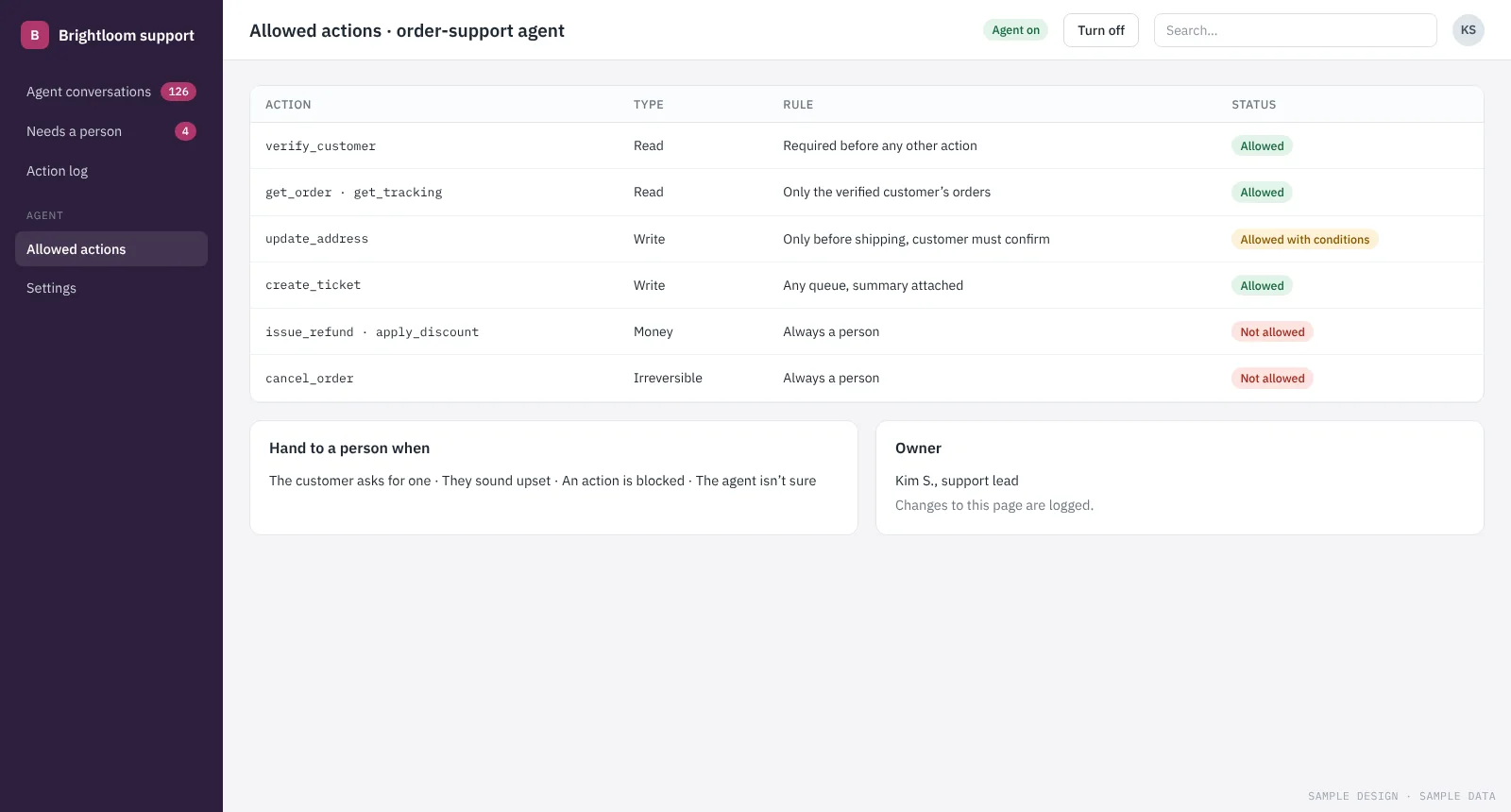
An order-support agent that acts, and knows when to stop
An AI agent checks orders, shares tracking and opens tickets in the help desk. Refunds and exceptions go to a person with the case already prepared.
See how it works →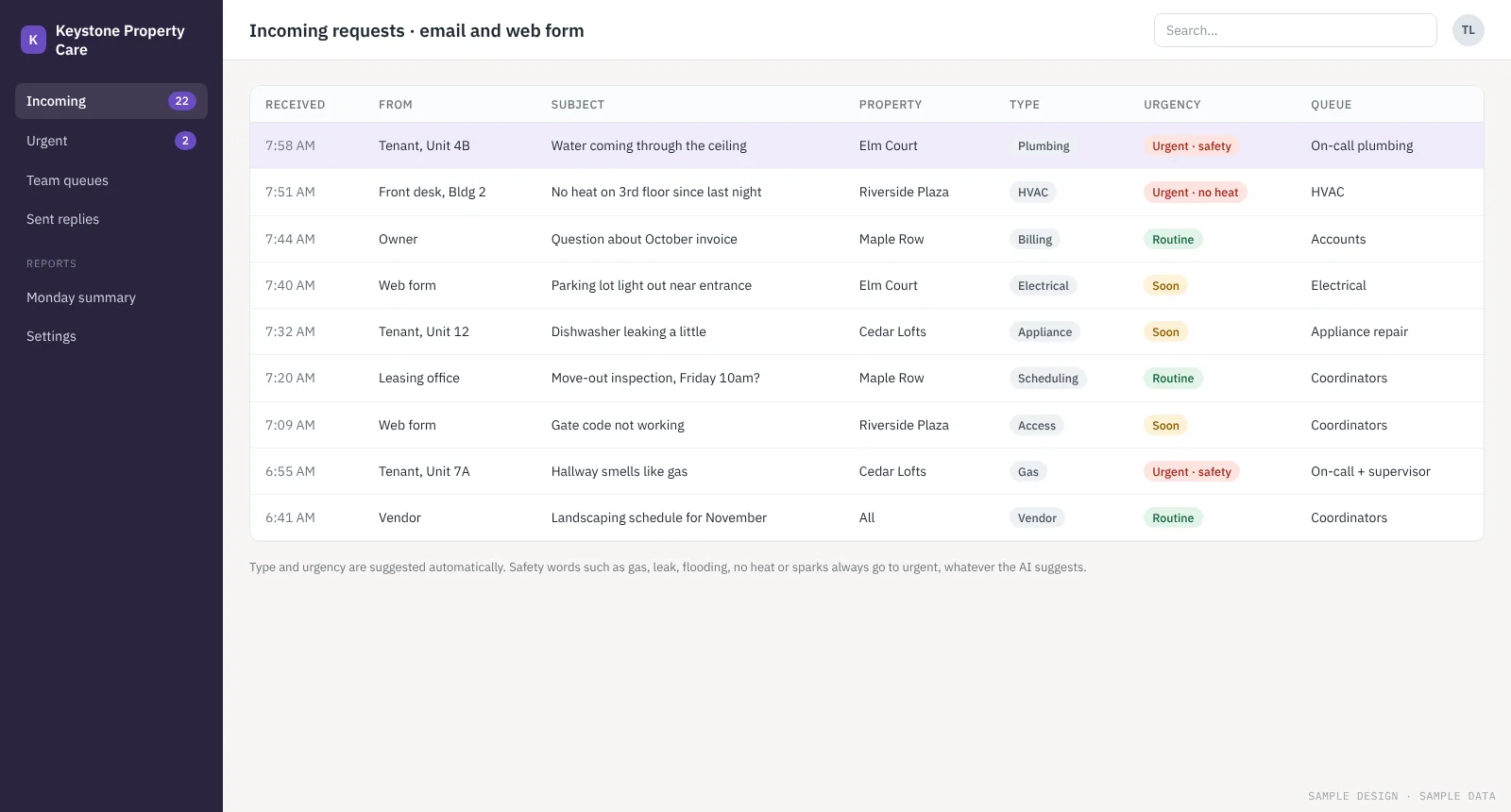
Service requests sorted, and a summary every Monday
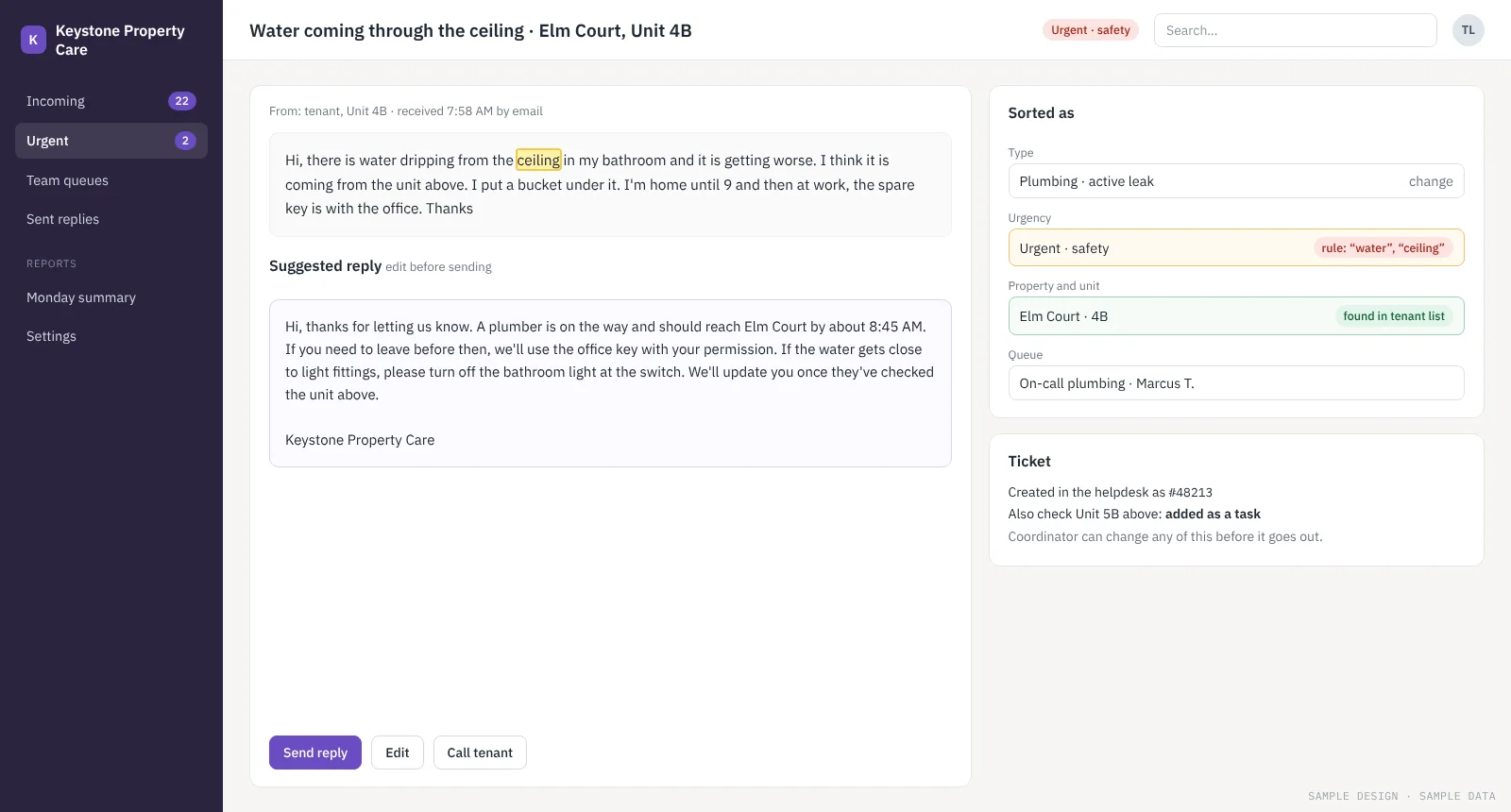
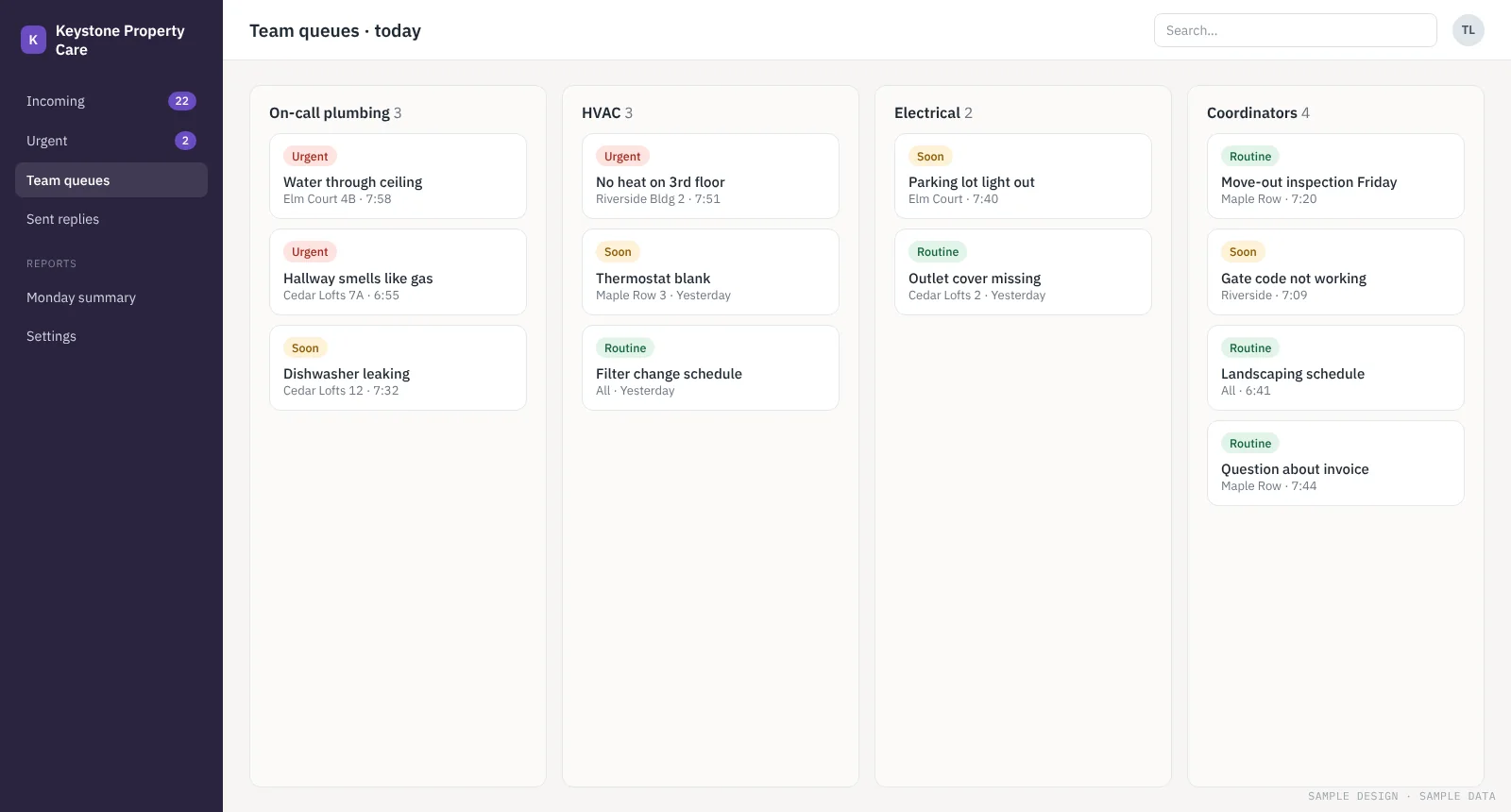
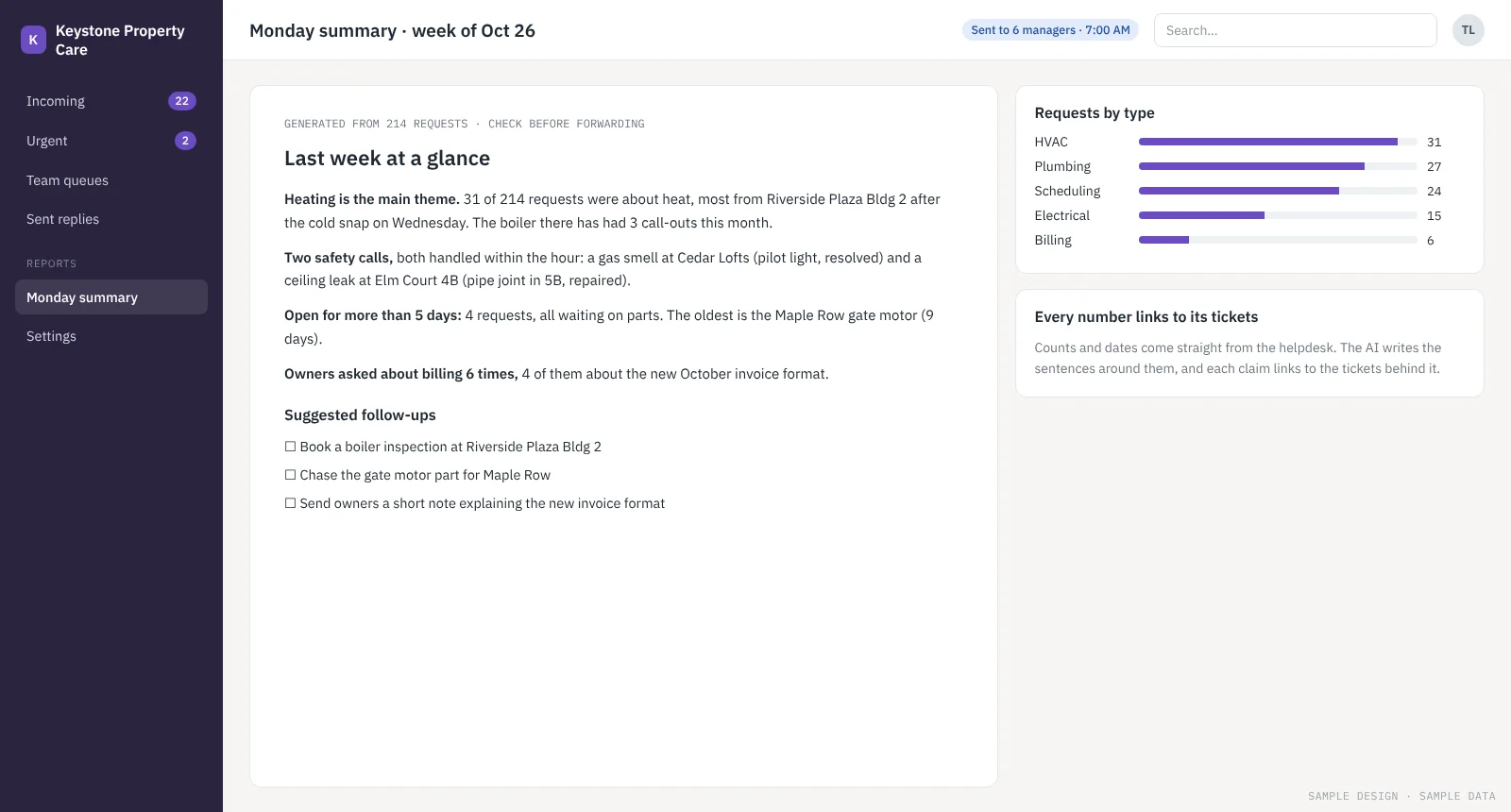
Requests from email and web forms are sorted by type and urgency, routed to the right team with a draft reply, and summed up for managers each week.
See how it works →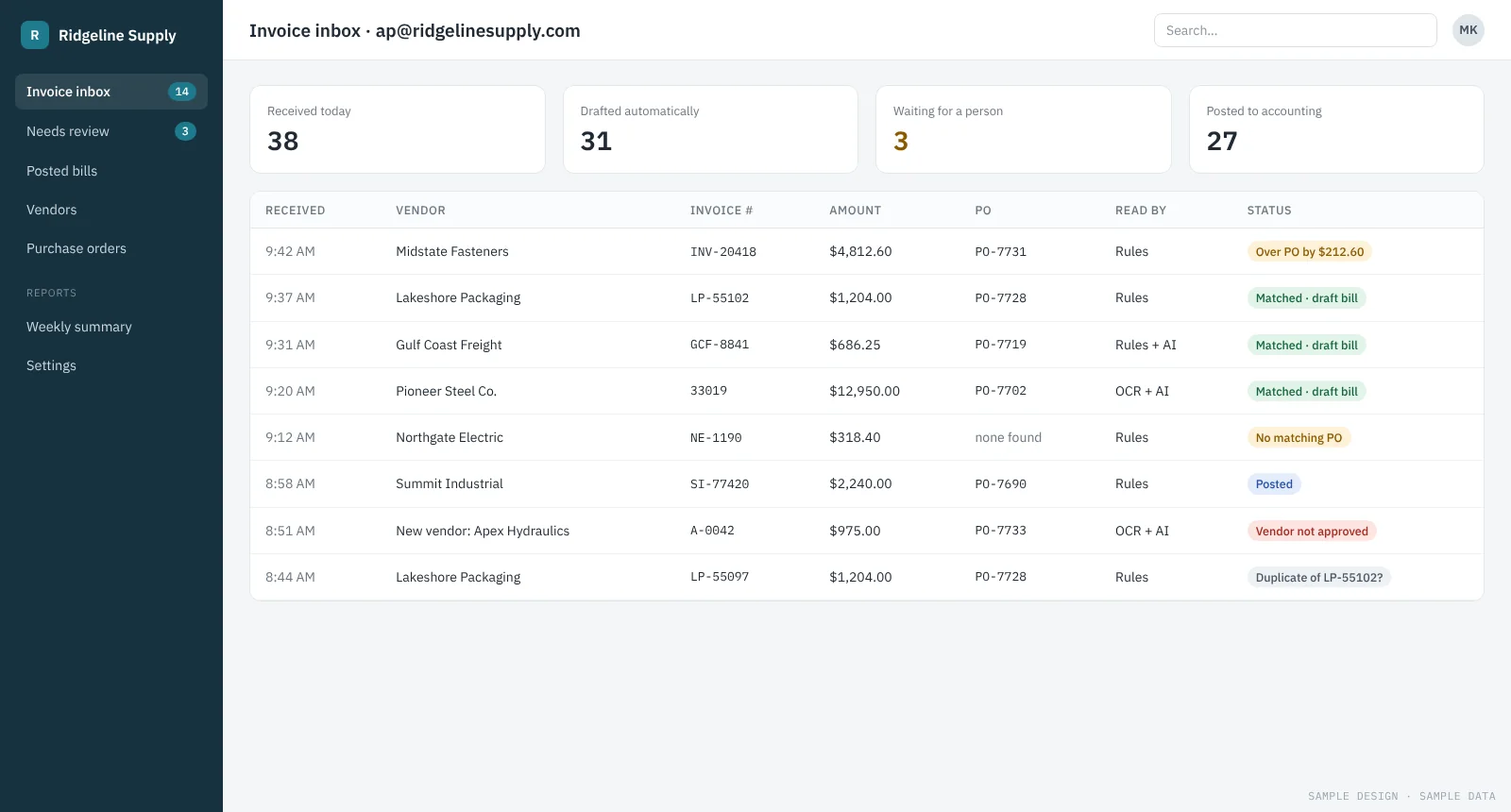
Vendor invoices into accounting, without retyping
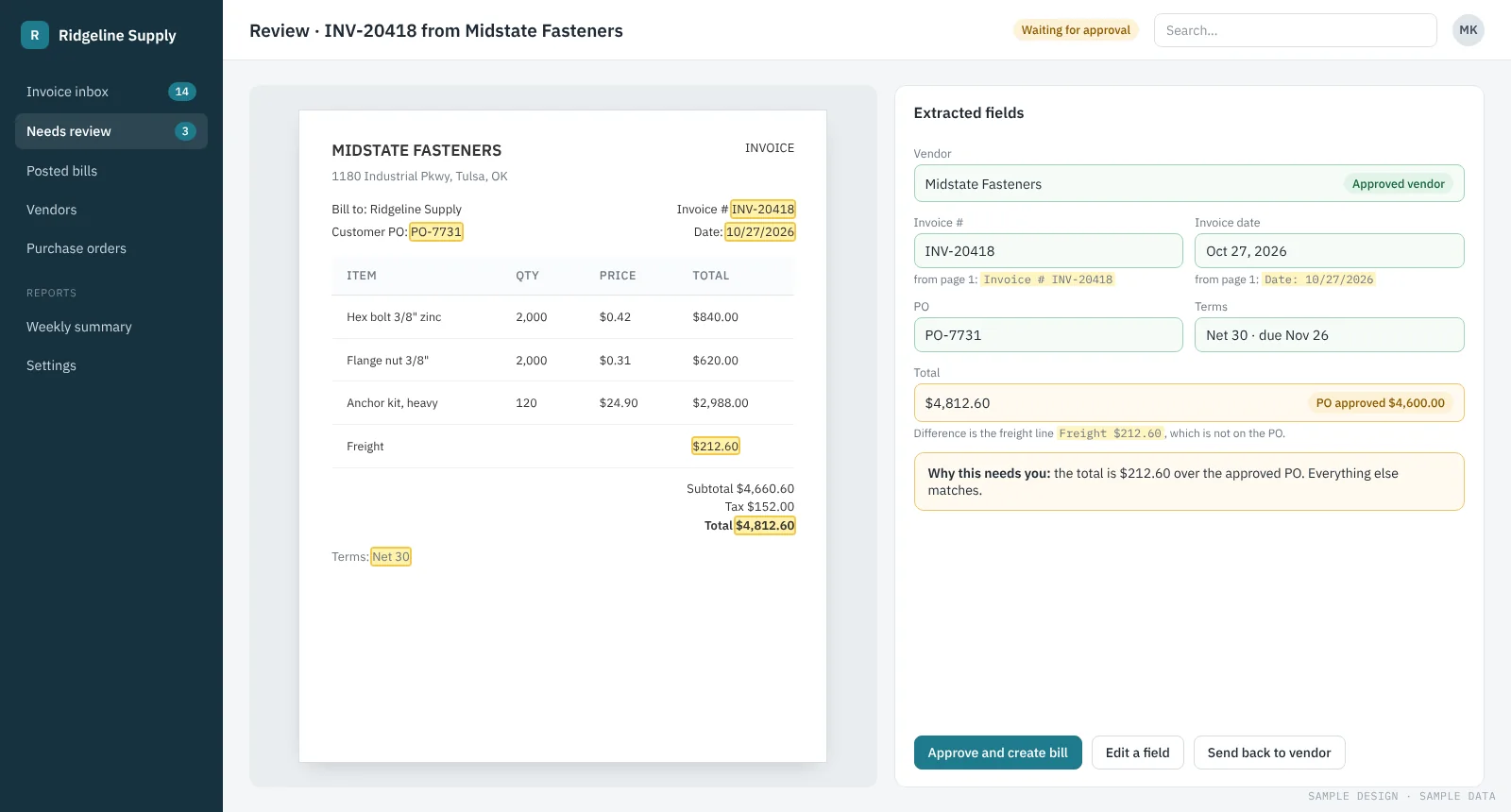
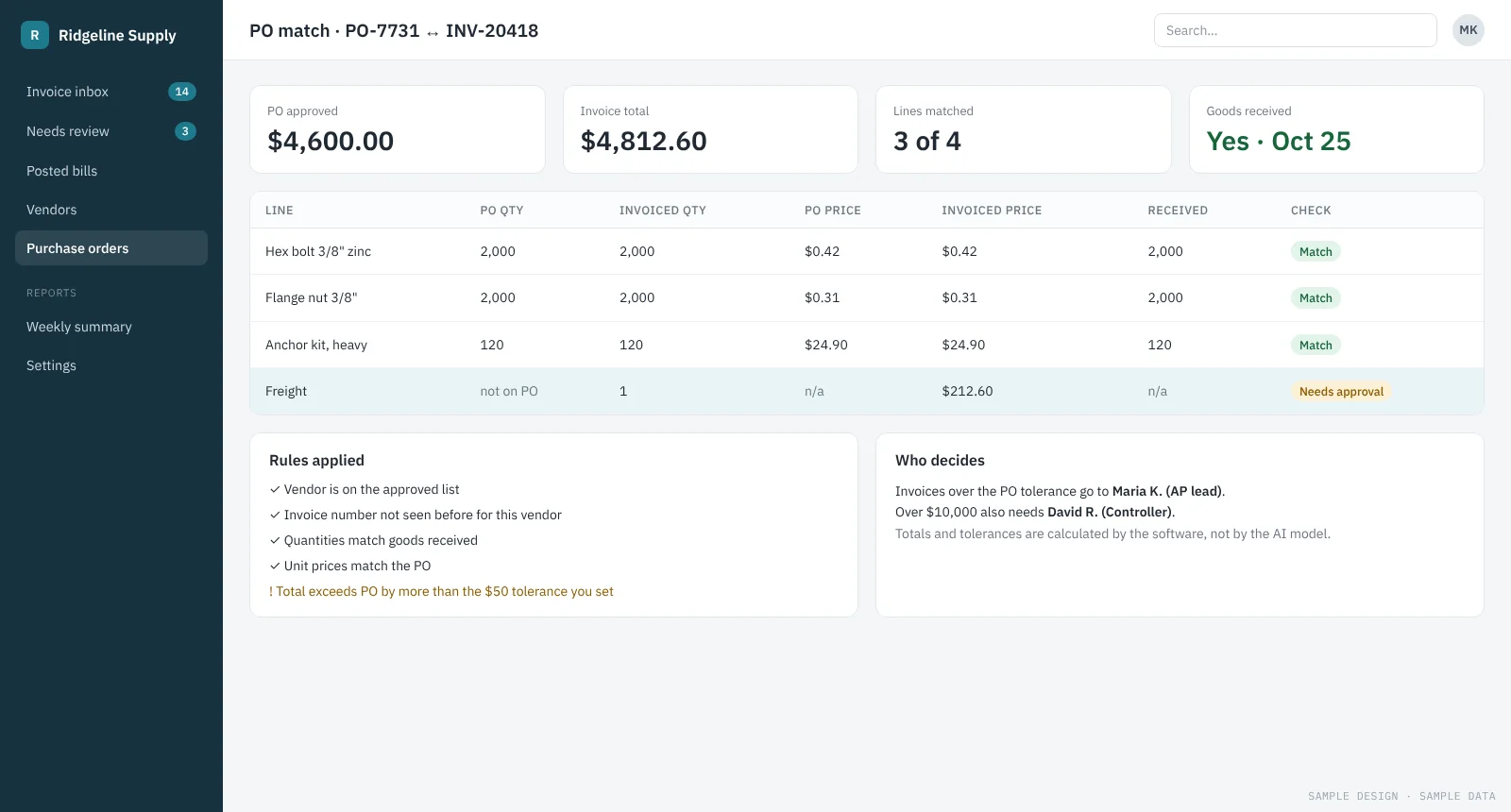
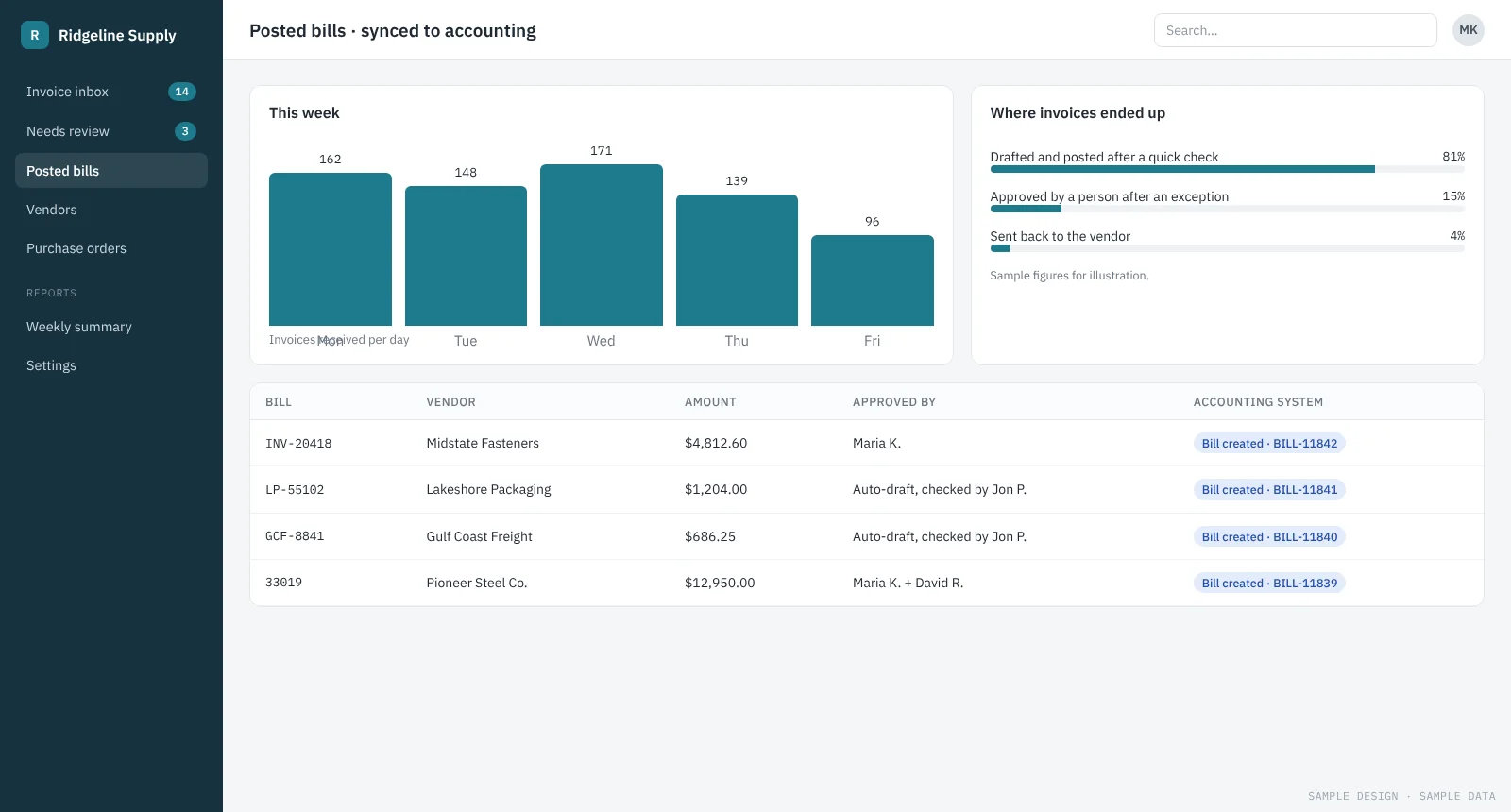
Invoices from a shared inbox are read, matched to purchase orders and drafted as bills. Only exceptions reach a person.
See how it works →Read our delivered case study: AI document intake for a construction-lien SaaS →
Want something like this?
Tell us about it. On the free assessment we’ll look at your real examples and give you an honest view of what AI can take on.