For businesses across the US · Team based in Dallas, Texas · On-site visits nationwide
AI agent development · for US businesses

AI agents that get work done, within limits you set

An AI agent understands a request and then acts on it in your systems: it checks an order, opens a support ticket, updates a customer record or books a visit. We design each agent around a short list of allowed actions, log everything it does, and hand anything risky to a person.

Prototype in 2 weeks · Team based in Dallas, working with businesses anywhere in the US

What is an AI agent?

An AI agent is software that uses a language model to understand a request, decide which of its allowed tools to use, and carry out the steps, for example reading an order from your store system and replying with the tracking link. Unlike a chatbot, it can change things in your systems, which is why its permissions, limits and handoff rules matter as much as the AI itself.

What we build

What our agents do

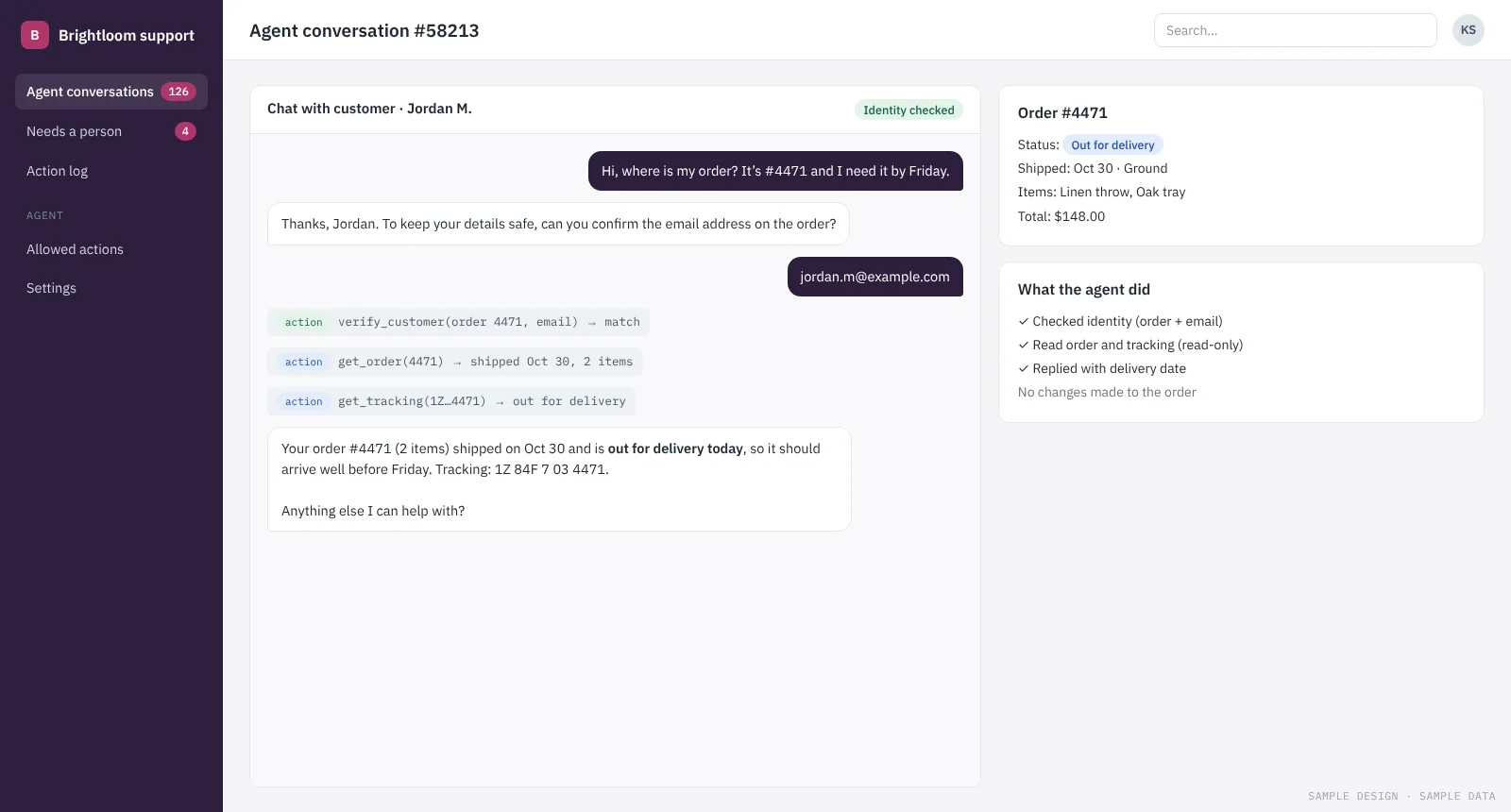
Order and account lookups

Customers get order status, delivery dates or account details after their identity is checked.

Support ticket handling

The agent gathers the details, creates the ticket in the right queue and tells the customer what happens next.

CRM updates

Contact details, call notes and deal stages updated from emails and conversations, ready for a person to confirm.

Scheduling and bookings

Appointments booked, moved or cancelled against your real availability.

Quotes and requests

Details collected and checked, a draft quote prepared, and a person asked to approve it.

Internal operations

Agents that check stock, chase missing paperwork or prepare reports from several systems.

Systems agents commonly connect to

CRMs such as HubSpot or SalesforceHelp desks such as Zendesk or FreshdeskE-commerce platforms such as ShopifyCalendars and scheduling toolsAccounting and ERP systemsYour own databases and APIs
How it works

How we build an agent safely

  1. Pick one job. Choose one task the agent will own, such as order status, and write down what a good result looks like.
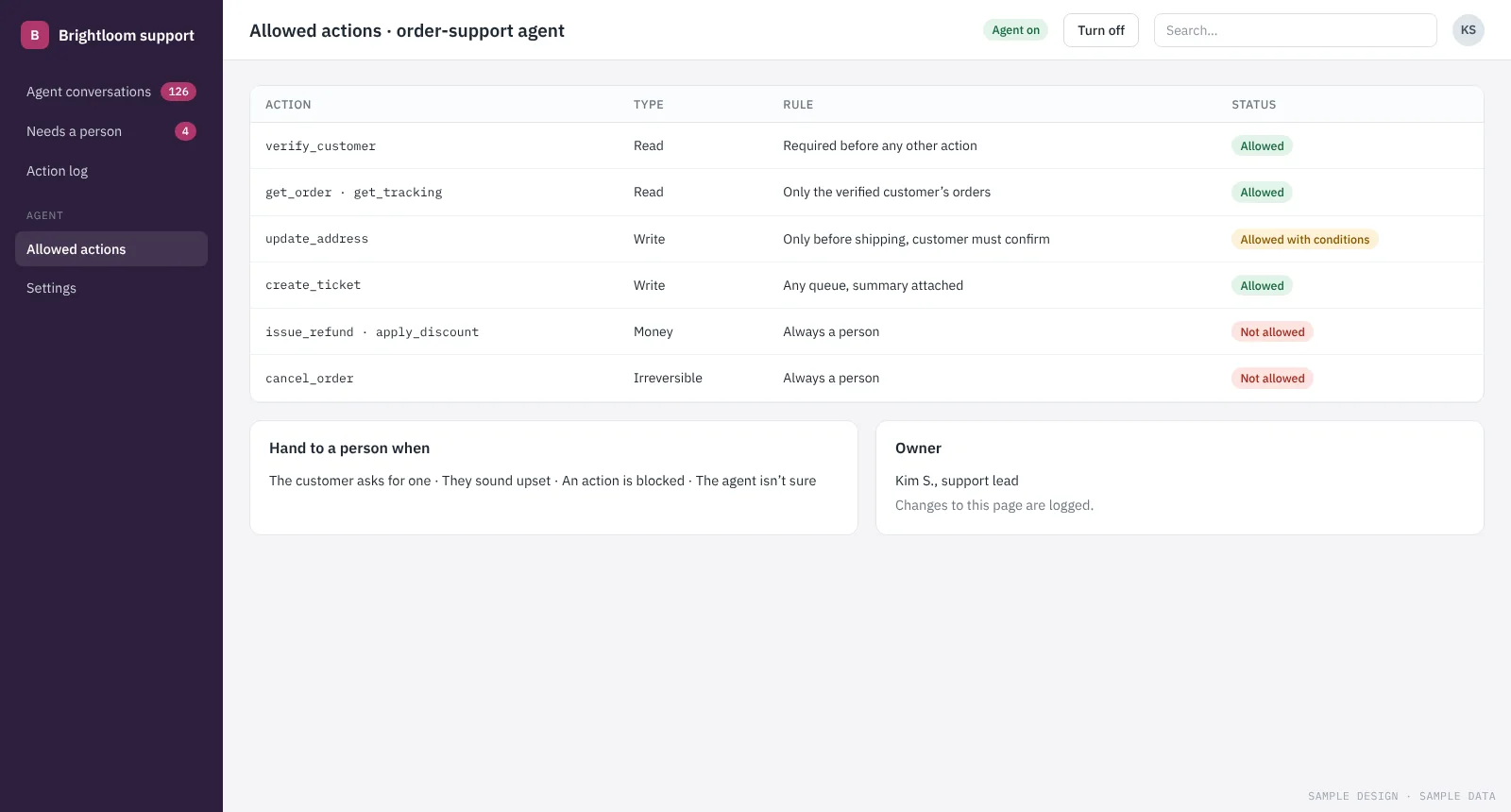
  2. Define its actions. List exactly what it may read and change. Everything else is off limits.
  3. Test on real cases. Run it on your past requests in a safe copy of your systems and review every step it took.
  4. Go live with oversight. Start with a person approving actions, then loosen the limits only where results earn it.
Safeguards

Guardrails on every agent

  • A fixed list of allowed actions, read-only wherever possible
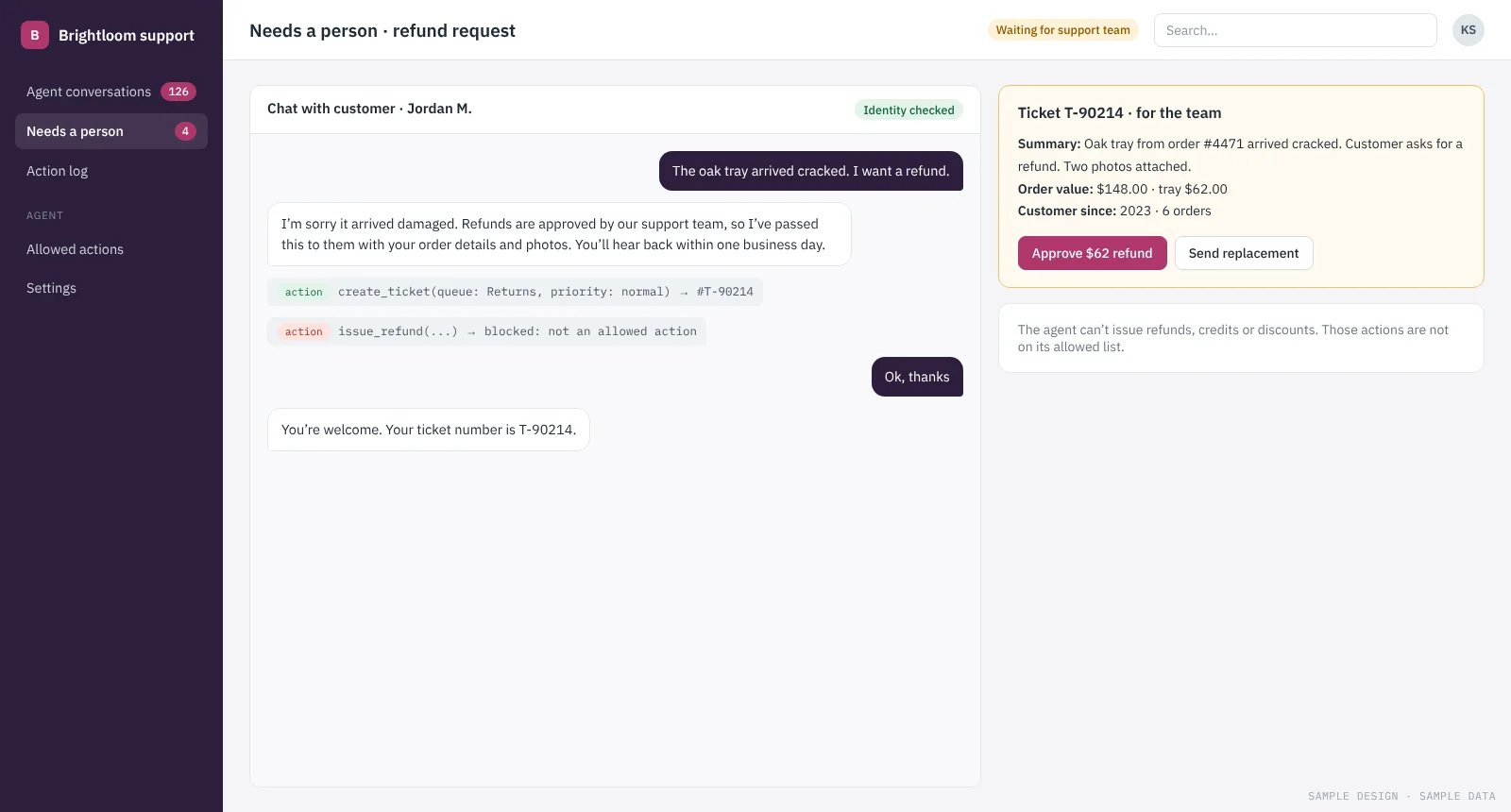
  • Approval required for money, cancellations and anything irreversible
  • Identity checks before showing customer information
  • Every action logged with what it saw and why it acted
  • Instant handoff to a person, and an off switch you control
Work

See it in practice

Delivered · Legal tech, US

Case assistant and document intake for a construction-lien SaaS

Users describe a job in plain words or drop in contracts, invoices and scans. The assistant reads them, asks for what’s missing and builds a draft case against a checklist. Rules do most of the reading, an LLM fills only what they can’t, and nothing is saved until a person confirms it.

Read the case study →
Example projectE-commerce · about 60 people

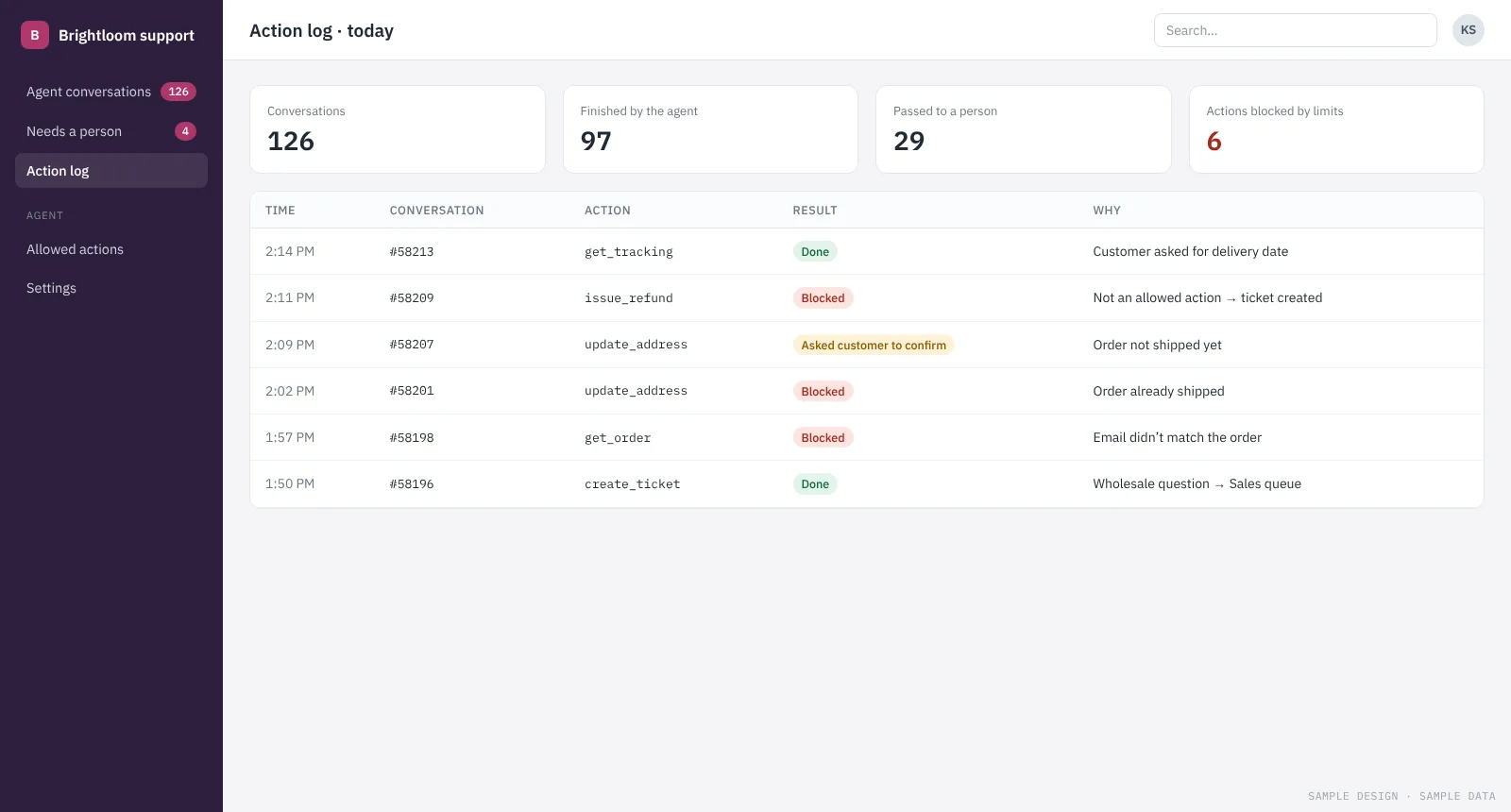
An order-support agent that acts, and knows when to stop

An AI agent checks orders, shares tracking and opens tickets in the help desk. Refunds and exceptions go to a person with the case already prepared.

See how it works →
Example projectProperty services · about 40 people

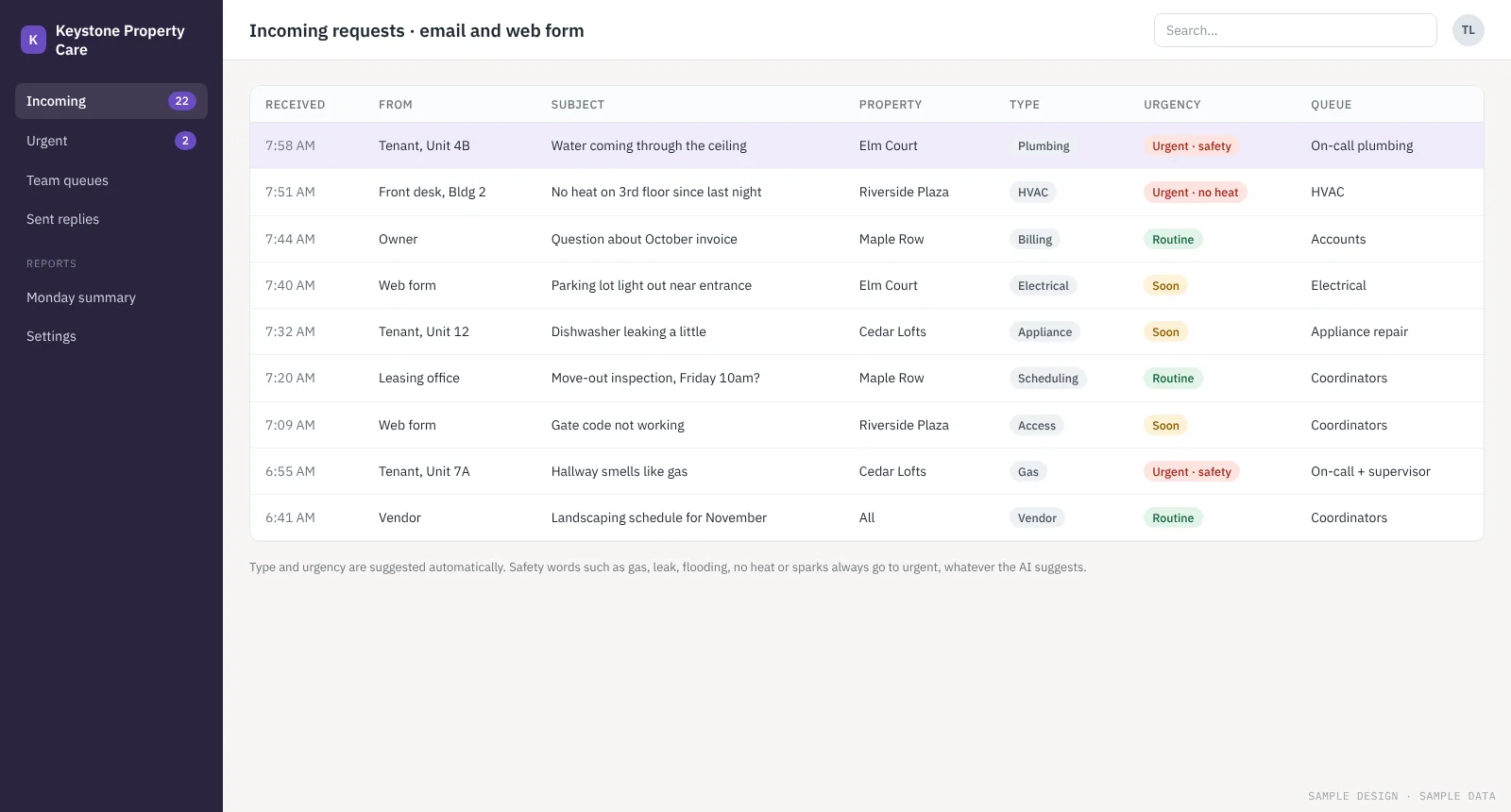
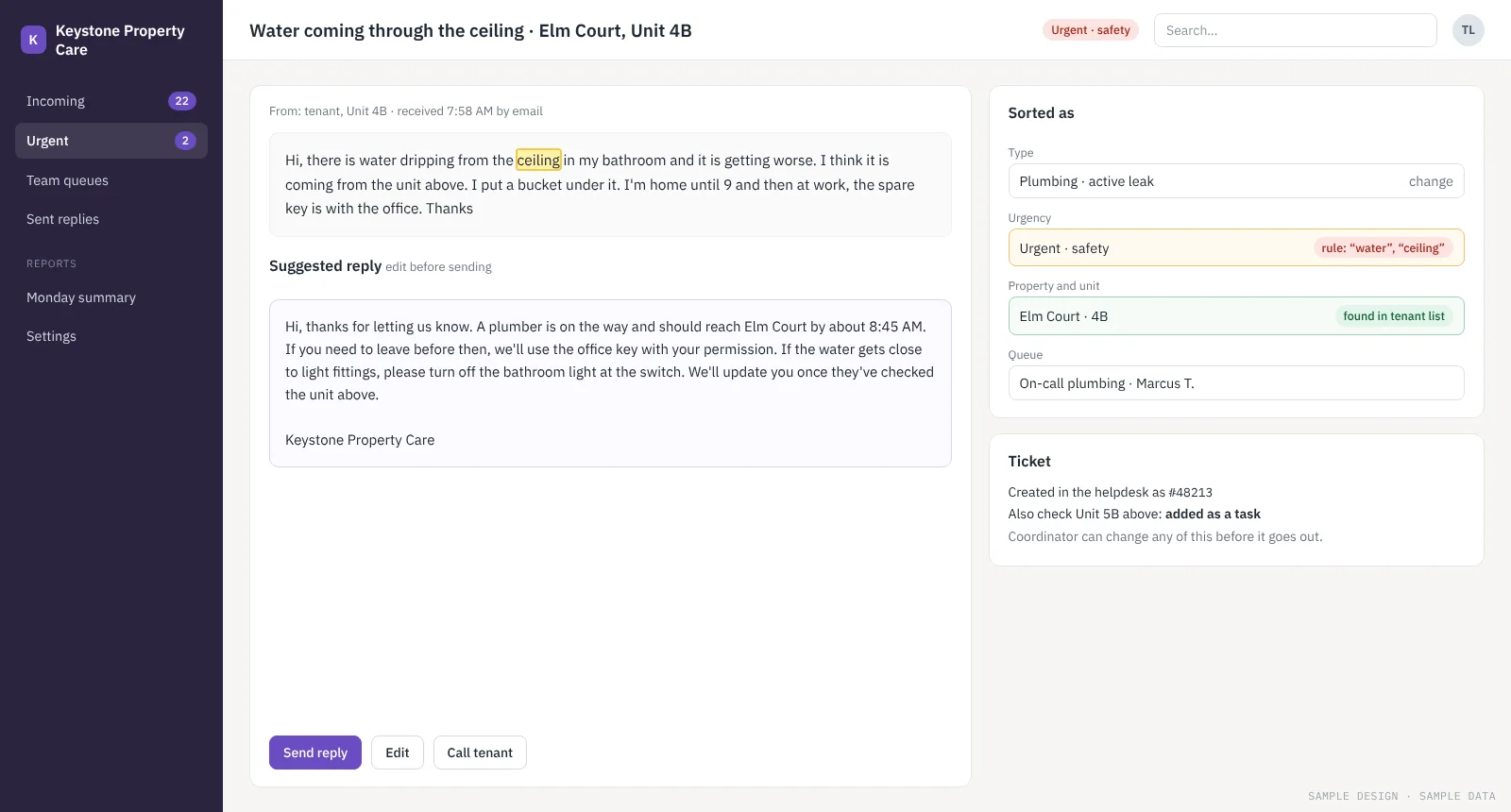
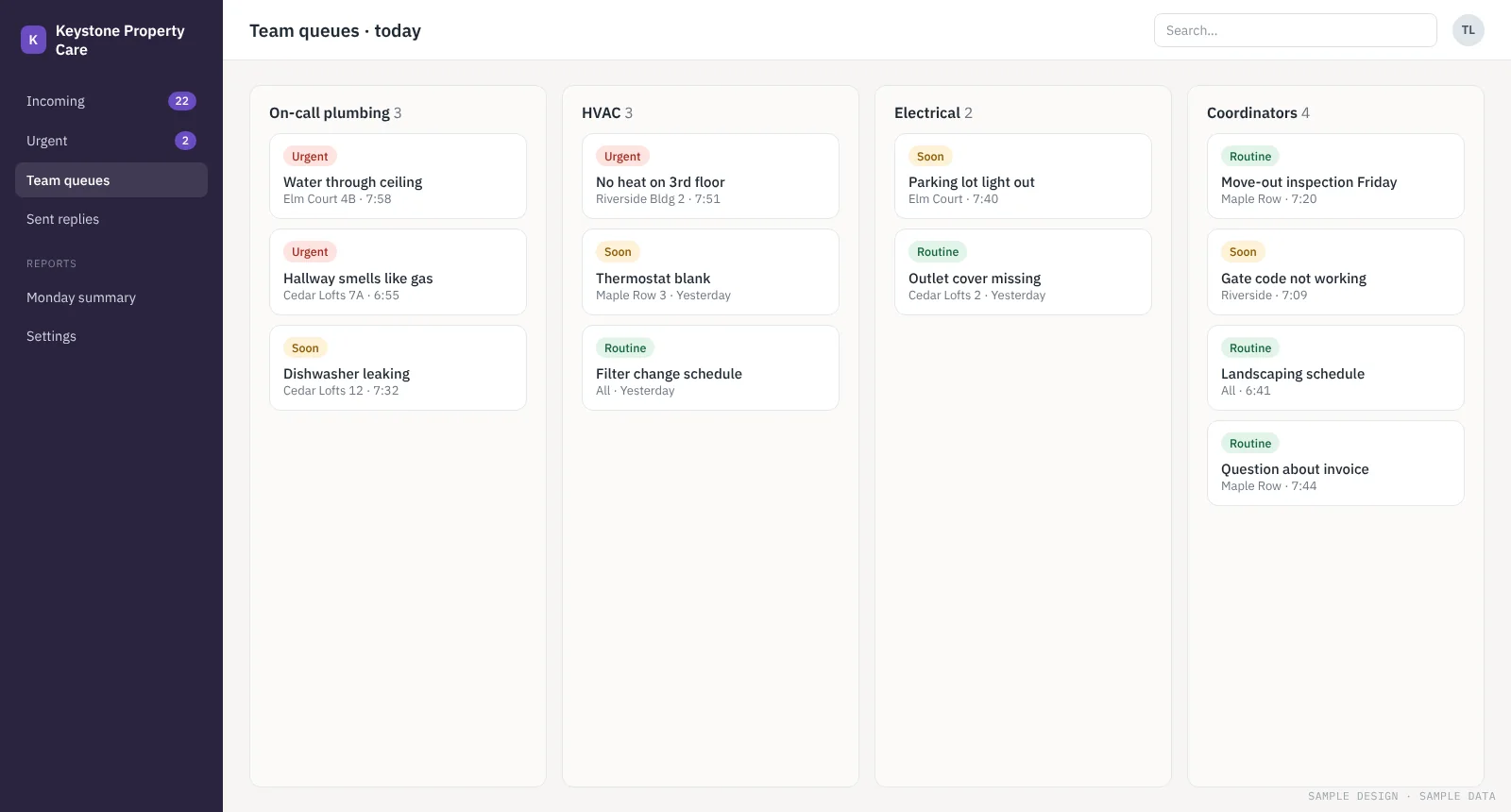
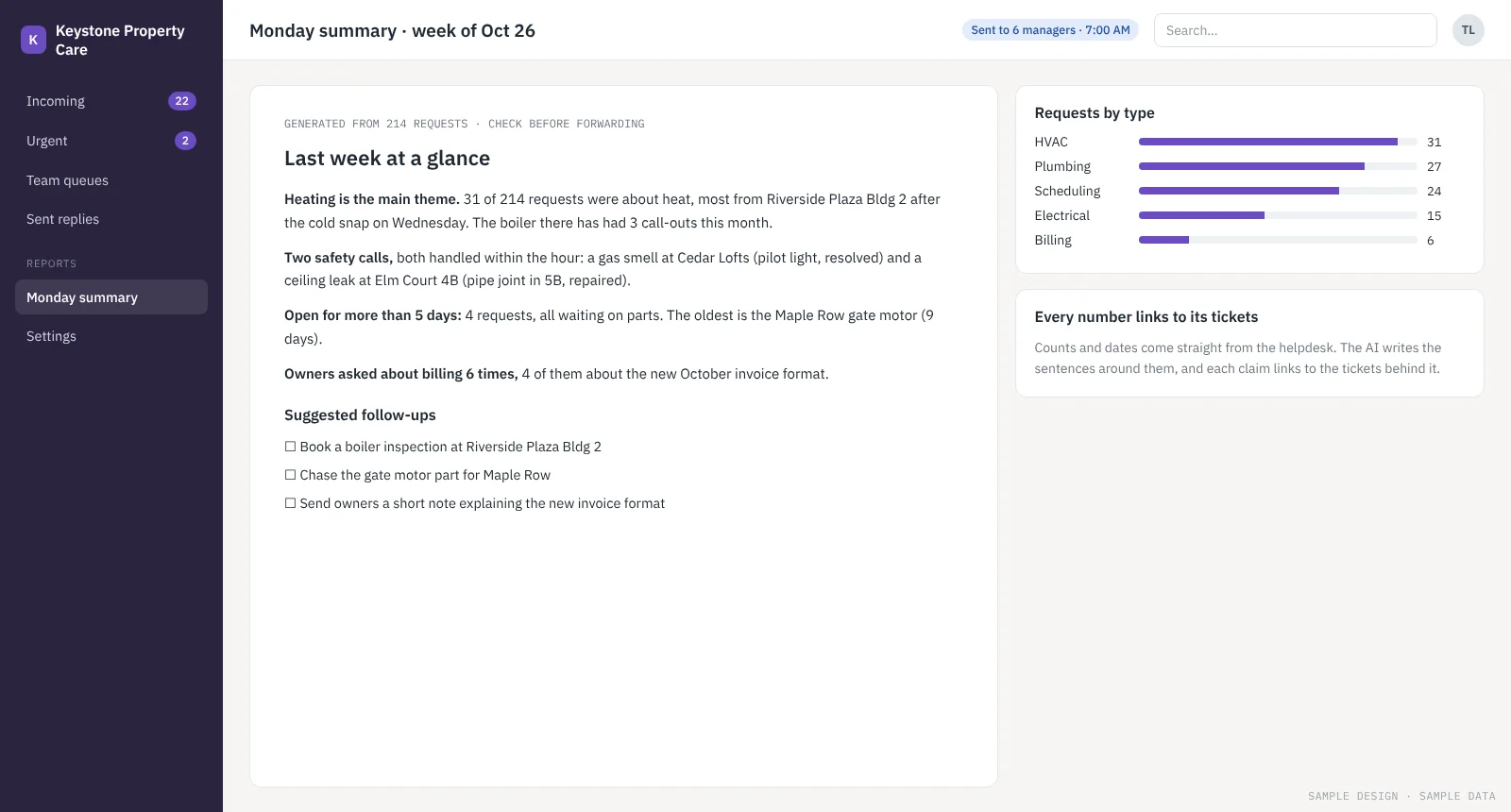
Service requests sorted, and a summary every Monday

Requests from email and web forms are sorted by type and urgency, routed to the right team with a draft reply, and summed up for managers each week.

See how it works →
Questions

AI Agent Development Services: common questions

Is it safe to let an AI agent change our systems?

Only within limits. Each agent gets a short list of allowed actions, approval steps for anything risky, and a full log. Most agents start with a person approving each action until the results justify more freedom.

What’s the difference between an AI agent and automation?

Classic automation follows fixed steps. An agent can handle requests worded in many different ways and choose the right step, but it does so inside the same kind of fixed limits.

Which systems can an agent work with?

Anything with an API or a reliable import format: CRMs, help desks, store platforms, calendars, accounting tools and your own databases. The assessment confirms what your systems allow.

How much does an AI agent cost?

The assessment is free. A prototype agent that handles one job in a test environment is a fixed $2,900 for 2 weeks. Running, monitoring and improving it starts at $3,500 a month.

What happens when the agent gets something wrong?

Risky actions need approval, so mistakes are caught before they happen. Every step is logged, we review the logs monthly, and you can switch the agent off at any time.

Talk about an AI agent

Tell us what you have in mind. The first conversation and the assessment are free.